Mexican wines and grapesBaja CaliforniaCoahuilaQuerétaro
Guide to Mexican White Wines: Grapes, Regions and How to Choose
Chenin Blanc, Sauvignon Blanc, Chardonnay and Viognier: the white grapes that work best in Mexico, which region makes what and how to choose your bottle.

Mexican wine has a secret kept in the fridge. The public conversation revolves around reds, but Mexican white wines have grapes with decades of history in the country, regions with the climate they need and bottles that hold up at the table. The turn toward freshness shows up as an international trend: in Spain, 2026 wine searches favor whites, according to the trade outlet Tecnovino (September 2026, a Spanish measurement, not a Mexican one).
This guide sorts the scene into three questions: which white grapes work in Mexico and how they taste, which region does each style best and how to choose the right bottle for the table and the budget. All with dated reference prices and listings from this site to follow the trail.
A note on method: the prices cited come from the winery's online store or from Mexican wine stores, checked in September 2026. There is no official price list for the Mexican shelf. If the price has changed by the time you read this, the source and its date are in the references so you can compare.
Which white grapes do best in Mexico?
Four varieties are a good starting point, and each has its own character:
- Chenin Blanc. It has a long history in the country: it was part of Monte Xanic's first wine. It makes aromatic wines of apple, pear, pineapple and a touch of honey, with refreshing acidity and friendly prices. It is a good entry to national white.
- Sauvignon Blanc. It does well in Guadalupe Valley (Valle de Guadalupe), where the cool Pacific nights preserve its bright acidity and its citrus and herbal notes: grapefruit, lime, freshly cut grass.
- Chardonnay. The all-rounder: without barrel it gives clean, fruity whites. With oak aging it gains body, cream and notes of vanilla and bread.
- Viognier. The perfumed one: white flowers, peach and apricot, with a round body. It does well in warm climates and is the hardest to find. In the valley, Solar Fortún has it in its newest blocks, alongside Marsanne, in a canyon where, according to the house, constant wind and sandy soils give fresh wines with good acidity.
Behind them appear Colombard, often found in fresh blends, Muscat, Palomino and experiments with Albariño and other varieties. The Mexican grape map is under construction: in Guadalupe Valley, Casa Magoni grows more than 70 varieties in an experimental field to see which adapt best, and Bodegas F. Rubio blends Palomino with Chenin Blanc in its white.
And there is a fifth form of white that is not a grape but a technique: orange wine, white macerated on its skins until it takes on a coppery color and tannin. If you like white but want something with more structure for the table, it is the natural continuation of this guide.
Which region makes which white?
Three regions serve as a map to start, for different climate reasons:
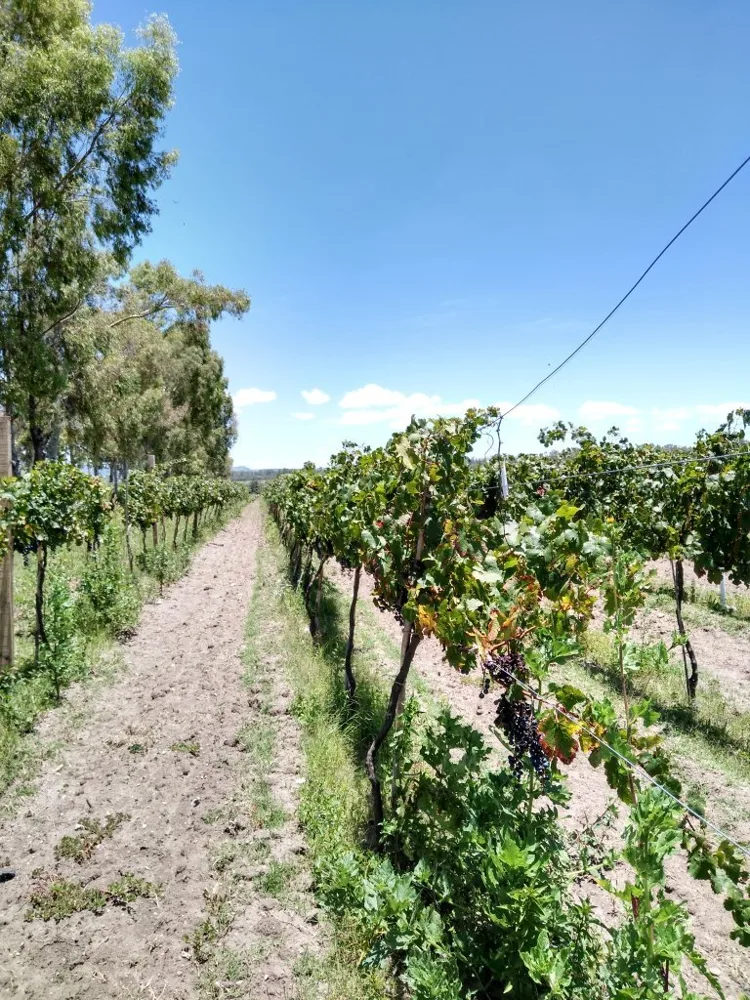
Baja California. The heart of the matter. The sea breeze and cool nights of Guadalupe Valley preserve the acidity that daytime heat takes away. Monte Xanic started with a white: its Chenin Colombard came out in the house's first harvest, alongside a Cabernet Sauvignon, and according to the house it was among the first in the valley to harvest its white grapes at night, so they reached the winery fresh. Finca La Carrodilla, in El Porvenir, bottles a single-variety Chenin Blanc from the grapes of its certified-organic vineyard.
The valley is not alone in the state: there are vineyards also in Ojos Negros, San Vicente and, farther south, San Quintín. When a label says Baja California without naming a valley, the winery's listing usually tells you where the grapes come from.
Coahuila. The Valle de Parras has vineyards at about 4,920 ft (1,500 m) of altitude and a big difference in temperature between day and night, which helps keep the grape's acidity. Casa Madero, the house that bills itself as the oldest in the Americas, makes Chardonnay and the 2V, a blend of Chardonnay and Chenin Blanc. The piece on the wineries of Parras de la Fuente tells how to visit the region.
Querétaro. The bet on altitude: vineyards at 5,910 to 6,890 ft (1,800 to 2,100 m), with warm days and cold nights, which also provide the base for Mexican sparkling wines, the region's specialty. La Redonda, founded in 1975 in Ezequiel Montes, at about 6,400 ft (1,950 m), bottles Sauvignon Blanc under its Orlandi brand and traditional-method sparkling wines with Macabeo and Chardonnay from its own vineyard.
And the other regions? There are also vineyards in Guanajuato, Aguascalientes, Zacatecas and San Luis Potosí, almost always at altitude. In San Miguel de Allende, for example, Dos Búhos grows Sauvignon Blanc and Sémillon, among about twenty varieties, at about 6,230 ft (1,900 m). The pattern that tends to repeat: where there is altitude or breeze, there is acidity, and where there is acidity, the white has something to work with. The listings for each region on this site show which houses already work with whites and in which zone.
Tip
A climate rule to remember: the higher the altitude or the stronger the night breeze, the more acidity and freshness in the glass. When you hesitate between two Mexican whites at the same price, the one from the colder region is usually the more food-friendly.
How much does a good Mexican white cost?
Three reference prices, checked in September 2026: the L.A. Cetto Chenin Blanc, one of the easiest whites to find, shows up at online Mexican wine stores for under 200 pesos. The Orlandi Sauvignon Blanc from La Redonda, around 350. And at Monte Xanic's online store, the case of three bottles of Chenin Colombard costs 1,184 pesos with VAT, about 395 per bottle.
A note of method on those figures: wine prices move with each vintage, each change of distributor and each tax adjustment, so take them for what they are, references verified on their date, not permanent rates. Before an important purchase, confirm the current price at the store or directly with the winery.
Before paying, the back label says a lot. If it mentions fermentation or aging in barrel, expect more body and notes of vanilla or toast. If it does not mention wood, expect fruit and freshness. The vintage also counts: young, unoaked whites are best enjoyed in their first years, so between two identical bottles pick the most recent. The guide to how to read a wine label explains the rest of the information.
Where to buy them? Besides the specialty stores in big cities, there is buying at the source: on the wineries' listings you can request the contact details and ask whether they ship.
What food goes with Mexican whites?
Mexican cooking is the natural habitat of white wine: acidity against heat, freshness against fried food, herbal aromas against cilantro and lime. The breakdown by dish:
- Ceviches, aguachiles and tuna tostadas: Sauvignon Blanc or young Chenin, well chilled.
- Fish and shrimp tacos: Chenin Blanc, which stands up to a light adobo.
- Fish a la veracruzana or a la talla: unoaked Chardonnay.
- Chicken in salsa verde, enchiladas suizas: oak-aged Chardonnay, since the cream calls for body.
- Asian food and spiced cooking: Viognier or an aromatic blend.
- Just a glass, a terrace and a hot afternoon: the freshest one in the fridge.
Reverse pairing works too: if you already have the bottle open and you decide the menu around it, think about what the wine brings. A valley Sauvignon calls for something with lime and sea salt. An oaked Chardonnay calls for fat, such as cream, butter and melted cheese. A slightly off-dry Chenin works magic with moderate heat, because the touch of sweetness calms the chile better than water.
For general pairing with national cooking, the guide to which wine goes with Mexican food is this site's complete reference. The short rule: if the dish has lime, cilantro or green chile, the white wins the bet almost every time.
At what temperature should white be served?
Colder than red, less icy than custom dictates. Young, fresh whites such as Sauvignon and Chenin shine between 46 and 54°F (8 and 12°C). Barrel-aged Chardonnays ask for a couple of degrees more to open their aromas. Too cold, the wine closes up and tastes only of cold. Lukewarm, it turns flat and alcoholic. Ten minutes out of the refrigerator before serving is usually just right in a warm climate.
And a table tip: at a restaurant, ask for the ice bucket only if the bottle arrives warm. If it already comes at temperature, the bucket keeps chilling it glass by glass. White warms up in the glass by itself, and that is where it should evolve.
The glass also adds something: a tulip-shaped white wine glass, or a universal glass, concentrates the aromas that an open tumbler disperses. At home you do not need collector's crystal. You need the mouth of the glass to be narrower than the bowl. With that, a Chenin at 200 pesos shows everything it has.
Tip
Leftover open bottle? Cork back in, into the refrigerator and drink it within the next two or three days.
How do you put together your Mexican white wine tasting?
- Gather three bottles from different regions: a Chenin from the valley, a Chardonnay from Parras and a Sauvignon from Querétaro.
- Serve them all between 46 and 54°F (8 and 12°C), in the same type of glass.
- Taste from the freshest to the most structured: Chenin, Sauvignon, Chardonnay.
- Put some lime, fresh cheese and a dish with green chile on the table: each white will respond differently.
- Note which one emptied its bottle first: that is your style, and the guide to how to taste wine helps you name what you liked.
When curiosity asks for territory, the wine routes of Mexico, state by state take you to try them at the source, and if the road is the valley, the piece on budget wineries lines up the tastings without overspending. And when gift season arrives, the guide to Mexican wines to give as gifts helps you pick a bottle for each person.
Share this story with whoever travels with you.