Mexican wines and grapesQuerétaroGuanajuatoBaja California
Mexican Pet-Nats: The Wild Bubbles Now Bottled from Querétaro to Guadalupe Valley
What a pet-nat is, how it differs from Champagne, which wineries in Querétaro, Guanajuato, Jalisco and Baja California make one, and what a bottle costs.

The crown cap gives way with a soda-pop hiss and the foam rises so fast you want the glass close by. The wine comes out cloudy, with a softer fizz than a celebration sparkling wine, and smells of freshly cut fruit. It is a pet-nat, and you no longer have to import it: pet-nat in Mexico is now bottled at wineries in Querétaro, Guanajuato, Jalisco and Baja California.
The contrast with what already existed is enormous. Querétaro has been a land of bubbles for almost half a century. The family that owns Freixenet bought its estate in the late 1970s, and today it ages its sparkling wines 82 ft (25 m) underground, at Finca Sala Vivé, for a year and a half or more. In the same state, in the Colón valley, Tierra de Peña bottles Flow, a Muscat that went into the bottle mid-fermentation. Both make sparkling wine, by almost opposite roads.
What is a pet-nat?
Pet-nat is short for pétillant naturel, French for naturally bubbly, and it names the ancestral method, which is older than the one used for Champagne. It fits in thirty seconds: the must starts to ferment in the tank, and before the yeasts finish eating the sugar, the wine is bottled and sealed. Fermentation continues inside, the gas has nowhere to go and stays dissolved in the wine. It is a single fermentation, with no added sugar or yeast to create the gas.
Because the yeasts finish their work inside the bottle, many pet-nats come out cloudy and with sediment. Some producers remove it before selling and others leave it. Tierra de Peña, for example, bottled one vintage of Flow after 13 days of fermentation and disgorged it a month and a half later to remove most of the sediment, according to the technical sheet published by an online store.
How is a pet-nat different from Champagne?
- Fermentations. Champagne, and any traditional-method sparkling wine, ferments twice: first a still base wine is made, and then, in the bottle, a second fermentation with added sugar and yeast. A pet-nat ferments only once.
- Bubbles. With a single fermentation, a pet-nat holds less gas than a traditional-method sparkling wine. Its fizz is softer, sometimes barely a tingle.
- Appearance. The traditional method ends with disgorgement, which leaves the wine clear. A pet-nat can arrive cloudy, and that is normal.
- Alcohol and sweetness. It can keep some of the sugar that did not get to ferment, and its alcohol is moderate: Flow states 10.2% on its 2023 vintage and Ventura, from Cava Garambullo, 12.5%.
- Time. At Sala Vivé, the main line spends about 18 months on its lees, and the Brut Nature Gran Reserva from Viña Doña Dolores spends 24 to 30. A pet-nat can go on sale a few months after the harvest, although there are exceptions: Ventura rests 12 months on its lees.
If you are looking for the full classification of sparkling wines, from brut nature to sweet, it is in our guide to Mexican sparkling wines.
Why is pet-nat growing in Mexico?
Along two roads that cross. The first is the taste for natural, minimal-intervention wine, which in Mexico already has its own bars, shops and producers. Pet-nat is the sparkling version of that same idea, and we cover it in our guide to natural wines. As an international reference, the Spanish outlet Tecnovino reported in 2026 that searches for pet-nat in Spain are growing around 12% a year. That is a fact about that market, not the Mexican one.
The second road is local. In December 2021, in Ensenada, a gathering called PETNATION brought together 14 independent projects presenting about twenty new pet-nat labels for the Mexican market, according to the newspaper El Mexicano.
And there is Querétaro, which already had a sparkling-wine craft. Among the wineries of Querétaro, Cava 57, in San Juan del Río, made its first years of wine with the support of Freixenet's infrastructure before opening its own winery in 2021, and its sparkling wines are still its specialty. In that traditional-method landscape, Tierra de Peña's Flow, from a hand-worked agroecological vineyard, is the other face of the same region.
Which Mexican wineries make pet-nat?
These are the houses whose pet-nat appears in their profile or in a source that names it. These are short-run wines, sometimes experimental, and the list changes with every harvest.
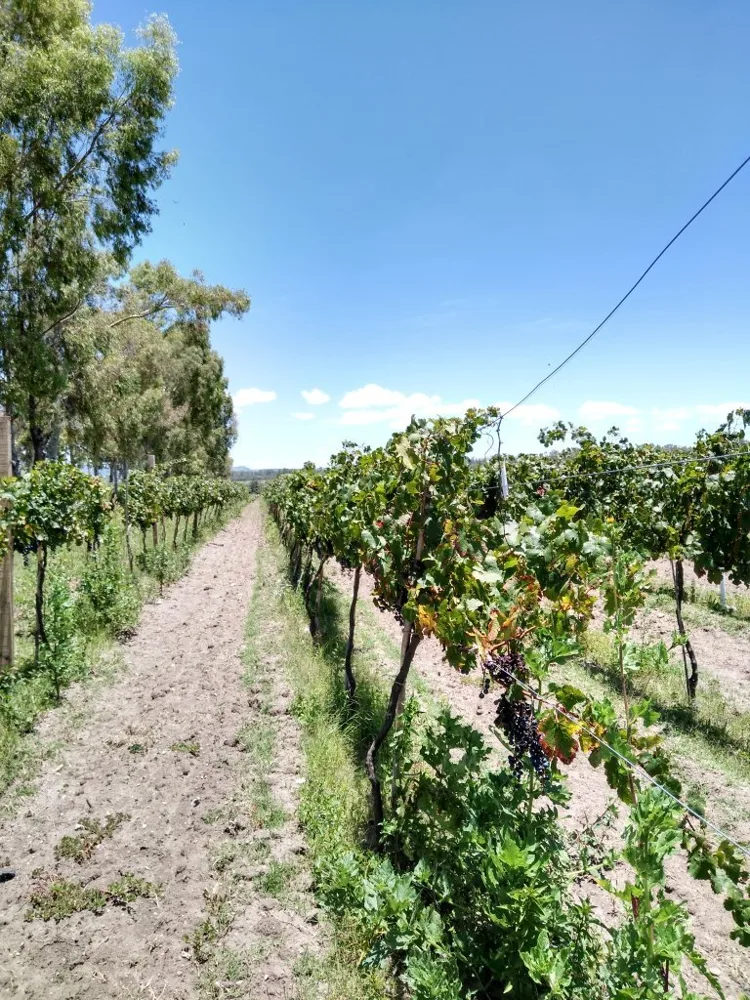
- Querétaro. Tierra de Peña, in Colón, near the Peña de Bernal, makes natural wine in a vineyard that Turismo de Querétaro describes as agroecological, worked by hand and free of pesticides. Its Flow is an ancestral-method Muscat, fermented with its own yeasts, unfiltered and unfined.
- Guanajuato. In San Miguel de Allende, Cava Garambullo makes Ventura, a Grenache pet-nat of which about 500 bottles are produced, according to the stores that sell it. At Vergel de la Sierra, in San Felipe, Octágono Vino Ancestral makes experimental pet-nat batches that it sometimes serves in its tasting room in downtown San Miguel.
- Jalisco. Altos Norte Vinícola, in Encarnación de Díaz, works both methods: the traditional one in its Bruto series and the ancestral one in the Zafado, sparkling wines with spontaneous fermentation and no added sulfites, according to the house.
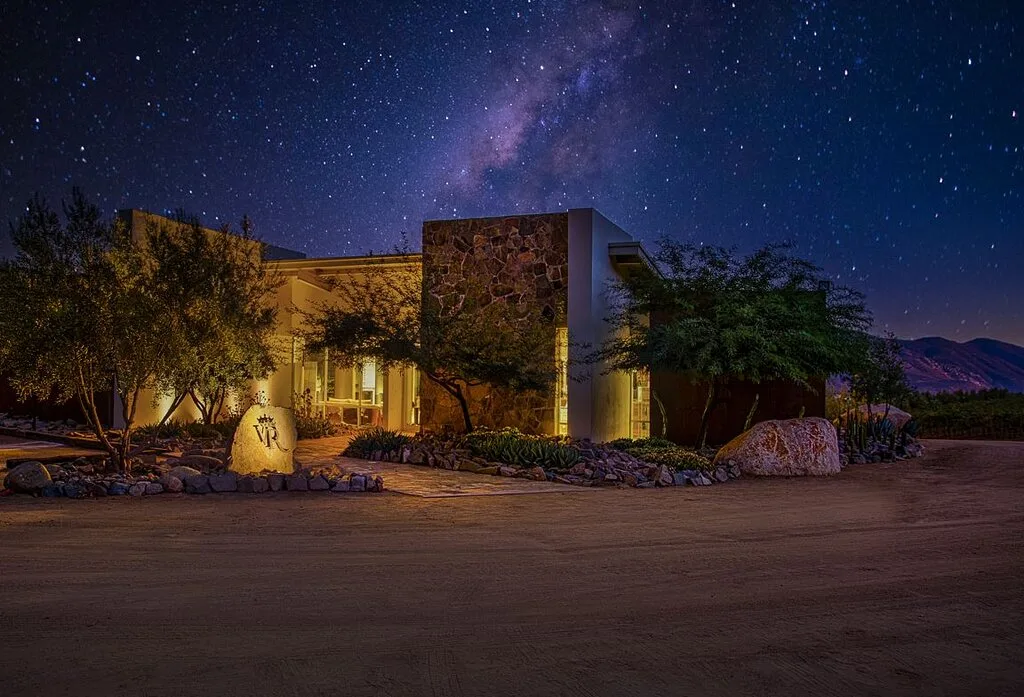
- Baja California. Cava Maciel, in San Antonio de las Minas, makes a Grenache rosé Pèt Nat. Clos de Tres Cantos, the winery in the photo, adds a Pet-Nat to its Brut Nature, and Vinícola Punto y Aparte, in El Sauzal, has its own. Farther south, Bodegas de Santo Tomás, the house from 1888 where the winemaker Cristina Pino signs the wines, bottles Cantarranas, a Chenin Blanc pet-nat.
We talk about Cristina Pino and other women who make the country's wine in our story on Mexican women winemakers.
Tip
On the label, look for pét-nat, pétillant naturel or método ancestral (ancestral method). The word pétillant on its own only says the wine has fizz, not how it was made.
How do you serve a pet-nat?
- Really cold. Like any sparkling wine, at 43 to 46°F (6 to 8°C). A bucket of ice water chills it faster than the refrigerator.
- Cloudy is fine. The sediment is yeast left from fermentation. If you prefer it clearer, stand the bottle upright in the refrigerator for a few hours so it settles. If you want more texture, gently turn it over before opening.
- Open it calmly. Many are sealed with a crown cap, like beer, and hold live gas, so open it over the sink or with the glass in hand, because the foam can burst out at once.
- A white wine glass. A white wine glass, wider than a flute, lets the fruit aromas out, and the soft gas of a pet-nat does not need a narrow glass to shine.
- Drink it soon. It is a young wine with few sulfites: once open, use a sparkling wine stopper, refrigerate it and finish it within a day or two.
At the table it asks for what any wine with acidity and bubbles asks for: seafood tostadas, fish tacos, fresh cheeses, snacks with chile and lime. Our guide to pairing wine with Mexican food explains why it works.
How much does a Mexican pet-nat cost and where can you buy it?
It is short-run wine, and the price shows it. As of September 2026, on Mexican online stores, Cantarranas appeared at roughly 600 to 950 pesos, Flow at roughly 750 to 1,000 and Ventura at roughly 950 to 1,250. Part of that tally is the taxes that all wine pays in the country, which we explain in why Mexican wine costs more.
To try one before buying a whole bottle:
- At the winery. Cava Maciel has a tasting room, Clos de Tres Cantos books its tastings on its website, Cava Garambullo receives visitors by appointment only, and Octágono sometimes serves its experimental batches in its San Miguel de Allende room.
- In Mexico City. El bar Caimán, in the Condesa neighborhood, includes pét-nat sparkling wines in its selection of living (natural) wines, and Vinos Chidos, in Hipódromo Condesa, sells natural wine from small producers.
- In Oaxaca. Glou Glou Wine Bar, inside a downtown hotel, serves pét-nats, orange wines and light reds, according to its profile.
If you have never tried one, order it at Caimán or at Glou Glou, or book the Cava Garambullo tasting, which is led by the same winemakers who make the Ventura.
Share this story with whoever travels with you.