How to Read a Wine Label and Tell Whether It Is Really Mexican
How to read a wine label: what Mexican law requires, what the grape, vintage and region say, and when a wine counts as Mexican under NOM-199.

At the shelf, a hundred bottles compete for your attention with names, crests and drawings. Knowing how to read a wine label turns that noise into information: which grape it contains, what year it is from, where it comes from, how much alcohol it has and who answers for it. It also settles a question worth asking every time you buy: whether what you are holding is really Mexican wine.
In Mexico the label is not free advertising. It is regulated by two official standards: NOM-142-SSA1/SCFI-2014, which sets what every alcoholic beverage sold in the country must disclose, and NOM-199-SCFI-2017, which defines each beverage and the conditions for using certain claims. With the basics of both, few bottles will fool you.
It pays to read in the same order the bottle speaks: first the front, where the house introduces itself, and then the fine print, where it answers for itself.
What does the front label of a wine say?
The front label is the public face of the bottle. It usually gathers five pieces of information, although not all of them always appear:
- The brand and the name of the wine. They can be the name of the winery, a line or a proprietary name. They tell you who signs it, not how it tastes.
- The grape or the blend. If a single variety appears, such as Tempranillo or Chenin Blanc, the wine was made mainly from it. If it says ensamble (blend), it is a mix of several.
- The vintage. It is the year the grapes were harvested, not the year the wine was bottled.
- The region. A valley, a municipality or a state: Guadalupe Valley, Parras, Tequisquiapan, Dolores Hidalgo.
- The style. Red, white, rosé, sparkling or sweet, sometimes with specifics like joven (young) or con crianza en barrica (aged in barrel).
The back label completes the required information and usually adds tasting notes, pairing suggestions or the story of the house. The first is law. The second is the producer's voice. Learning to tell them apart is half the craft.
Some words on the front talk about sugar and not about quality. On sparkling wines, brut or extra brut indicate how much sweetness the wine has (the full scale is in our guide to Mexican sparkling wines). On still wines, semiseco (off-dry) or dulce (sweet) say the same thing in other words. If that difference interests you, in our guide to soft and sweet red wines we explain why a sweet wine and a soft one are not the same thing.
How do you read a real label, piece by piece?
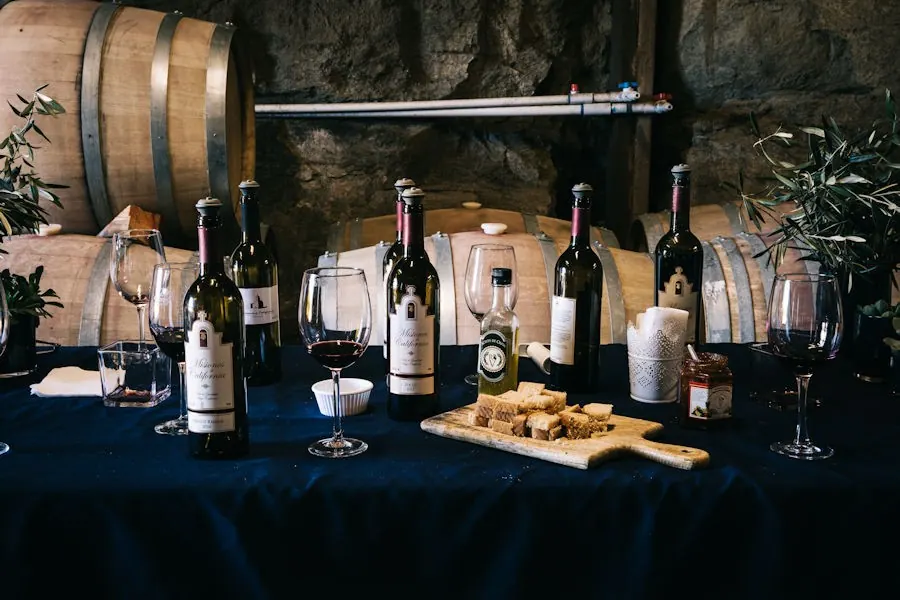
Look at the bottles in the photo that opens this guide. They are from ATP Vinos y Familia, a family winery in San Antonio de las Minas whose labels, according to its profile, play with chess, another passion of the owner. Take the second from the left and read it in order:
- The name: Peón de Rey. It is a proprietary name. It tells you how the house wants you to remember it, not how it tastes. The winery's signature goes separately, in its logo.
- The vintage: 2012, the year the grapes were harvested.
- The grape: Tempranillo. By naming a single variety, the label tells you the main grape of the wine.
- The fine print: the alcohol content and the contents of the bottle, 750 ml.
- The origin: Valle de San Antonio de las Minas, Ensenada, Baja California, México. It is a Mexican region highlighted on the label, with what that implies under the standard, as you will see below.
The neighboring bottles say Ensamble (blend), Cabernet-Merlot or Merlot. On a single table you find one variety, two named varieties and a blend. When the front only says ensamble, look at the back label for which grapes it contains. And notice the first bottle in the row, the rosé: its label says Nebbiolo Rosé, a grape whose name in Baja California has a genetic story worth knowing.
What does the law require on every bottle in Mexico?
NOM-142-SSA1/SCFI-2014, published in the Diario Oficial de la Federación (Mexico's official gazette) in March 2015, sets the health specifications and labeling for alcoholic beverages sold in the country, whether made here or imported, and compliance is mandatory. The label must be in Spanish and must state, among other things:
- The name or designation of the beverage and the brand.
- The alcohol content, expressed as a percentage of alcohol by volume, such as 13.5% Alc. Vol.
- The net contents, for example 750 ml.
- The party responsible for the product: the producer or, for an imported wine, the importer.
- The country of origin.
- The production lot.
- The cautionary legend EL ABUSO EN EL CONSUMO DE ESTE PRODUCTO ES NOCIVO PARA LA SALUD (excessive consumption of this product is harmful to health), in capital letters and in a color that contrasts with the background.
That is why imported wines carry a back label in Spanish with the importer's details, and why, when you doubt the origin of a bottle, the back label is the first place to look.
Two items in that fine print deserve more attention than they get. The responsible party tells you who made or brought in the wine: a producer with an address in Mexico points to a wine made here, while importado por (imported by) warns that it comes from abroad. The lot, which looks like an unimportant code, is what allows a specific batch to be traced if something goes wrong.
Tip
The alcohol content says a lot about style. A 12% white is usually light and fresh, and a 15% red will feel warmer and fuller. If alcohol bothers you, compare this number before the price.
When does a wine count as Mexican wine under NOM-199?
The short answer to the question in the heading is in NOM-199-SCFI-2017, published in the Diario Oficial de la Federación on October 30, 2017. The standard defines as Mexican wine one made from 100% grapes of the Vitis vinifera species of Mexican origin, whose entire content is fermented and bottled in national territory.
There are three conditions, and all three must be met:
- The grapes are Mexican, all of them. A portion is not enough.
- Fermentation happens in Mexico.
- So does the bottling.
The distinction matters because a phrase like embotellado en México (bottled in Mexico), on its own, says where the drink was packaged and nothing about where the grapes came from. The designation vino mexicano (Mexican wine) is the one the standard ties to the three conditions. If the bottle uses it, the grapes, the fermentation and the bottling have to be from here.
For the buyer, that designation works as a guarantee of origin. For the producer, it recognizes that everything began with a vine planted, tended and harvested in the climate and soil of this country.
What do the grape and region percentages mean?
Two figures from the same standard help you read between the lines:
- 75% to name a grape. The standard ties naming a variety to the wine containing at least 75% of it. If it is made from two or more, at least the two main ones are declared. In practice, a plain Merlot is a wine that is mostly Merlot, not necessarily 100% Merlot.
- 85% to claim a place. If the label highlights a region or a locality, at least 85% of the grapes must come from there. Guadalupe Valley printed on the bottle is therefore a claim of origin with legal backing.
The standard does not tell you, on the other hand, whether one wine is better than another. Words like reserva or gran reserva do not mean the same thing in every country either. On a Mexican bottle, the safe move is to look on the back label for how many months the wine spent in barrel, or to ask.
What does the vintage on the bottle tell you?
The vintage is the year of the harvest. It tells you how old the wine is and, if you know the region, what that year was like: hotter, rainier, shorter. Two bottles with the same label from different years can taste different, and that is part of the charm.
As a rule of thumb, whites, rosés and young reds are best enjoyed young, within a year or two of the harvest. Reds aged in barrel last longer and sometimes benefit from it. An old vintage on a simple rosé is a bad sign. On a red made for cellaring, it can be a virtue.
A wine with no year is not a flaw in itself. Some are made by blending harvests to keep a constant style, which is common in sparkling wines.
If at the store you find the same label from two different years, ask which one is at a better moment. And if you visit a winery, asking for a tasting of two vintages of the same wine is the most direct way to understand what time does in the bottle.
Are medals and scores any use?
A medal says that a jury rewarded a specific wine, of a specific vintage, at a specific competition. Before you get carried away, check that the year of the medal matches the year on the bottle and that the competition appears under its full name. If you want to verify it, look up the wine in the results the competition itself publishes. Which Mexican wines won at the big 2026 competitions is in our review of the year's awards.
The same goes for scores: a 90 from a guide is good for that guide and that vintage. Phrases like limited edition, premium or signature wine are commercial language. They do not say how the wine was made or where the grapes come from. That is in the fine print, and the law requires it to be there.
How can you tell if a wine is Mexican in three minutes?
With the bottle in your hand, follow this order:
- Look for the country of origin and the responsible party. NOM-142 requires them. If the back label only shows an importer, the wine comes from abroad.
- Look for the designation vino mexicano. Under NOM-199, it corresponds to a wine made from 100% Mexican grapes, fermented and bottled in the country.
- Look for a Mexican region. A valley or a municipality of the country highlighted on the label implies that at least 85% of the grapes come from there.
- Be wary of partial claims. Embotellado en México (bottled in Mexico), with nothing else, says where it was packaged, not where the grapes are from.
- Ask. At a specialty store or at the winery, asking where the grapes come from is a normal question, and they should be able to answer it.
Tip
Take a photo of the back label of the wines you like. Over time you will have your own map: which regions, which grapes and which houses keep repeating in what you enjoy.
Which regions of Mexico will you see on the label?
These are the places recorded in the profiles of our directory, the same names that appear on many national labels. Sometimes the bottle names the valley, sometimes the municipality and sometimes only the state. The more precise, the more it tells you. Each regional guide lists the area's wineries, and the grapes and seasons of each state are in Mexico's wine routes, state by state:
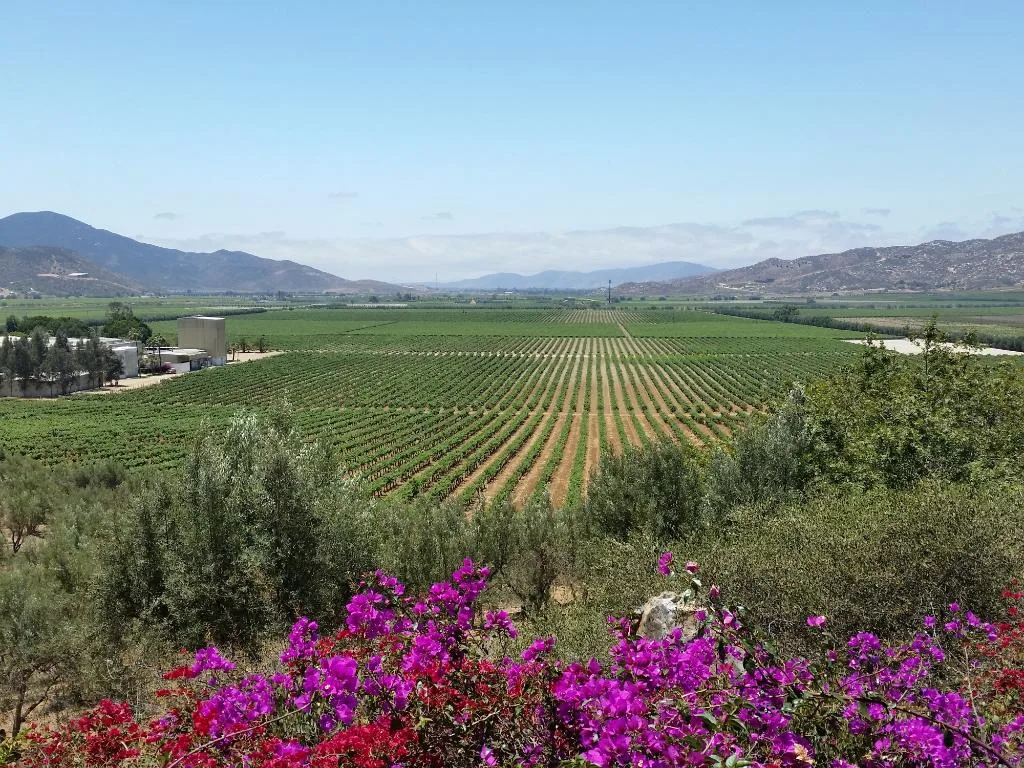
- Baja California wineries: Guadalupe Valley (Valle de Guadalupe on labels), San Antonio de las Minas, Valle de Santo Tomás, Valle de San Vicente, Valle de Ojos Negros, Valle de la Grulla, San Quintín and Tecate.
- Querétaro wineries: Tequisquiapan, Ezequiel Montes, Colón, San Juan del Río, Cadereyta de Montes, Huimilpan and El Marqués.
- Guanajuato wineries: Dolores Hidalgo, San Miguel de Allende and León.
- Coahuila wineries: Parras de la Fuente, Cuatro Ciénegas and the Sierra de Arteaga.
- Aguascalientes wineries: Pabellón de Arteaga.
- Zacatecas wineries and Chihuahua wineries: fewer houses in our directory, but with wine of their own.
The next time you buy wine, turn the bottle over before you pay. Look for the country of origin, the responsible party, the region and the vintage. If everything points to Mexico, you know which valley your glass comes from. And if that valley makes you curious, its regional guide is the next step: few things clarify a label as much as walking among the vines that made it possible.
Share this story with whoever travels with you.