Mexican wines and grapesBaja CaliforniaGuanajuatoQuerétaro
Natural, Organic and Biodynamic Wines in Mexico: What Each One Means
Natural, organic, biodynamic or low-intervention: what each label means, who makes these wines in Mexico and how to choose your first bottle.

Three words dominate the wine conversation today: natural, organic and biodynamic. They are used as if they were the same thing, they appear together on the same wine lists and they confuse even veteran enthusiasts. Natural wines in Mexico now have wineries of their own and dedicated bars, and it pays to know what each word promises before paying for it. As a thermometer of the wave, in Spain searches for sulfite-free wine and regenerative agriculture are growing 10.5% a year (the trade outlet Tecnovino, September 2026, a Spanish measurement, an indicator of an international trend, not of Mexican demand).
The good news: the differences among the three labels can be explained at a table. The bad news: of the three, only organic has legal backing in Mexico. Biodynamic depends on private certifiers and natural has no definition. This guide separates the concepts, shows who works this way in the country and teaches you to pick your first bottle without paying the beginner's tax.
A note on method: since the term natural has no Mexican legal definition, everything that follows describes practices declared by the wineries themselves or documented by the specialized press. At the end of each road, the listing for each house on this site is where you request the contact details and ask directly.
What is an organic wine?
It is the easiest to define because it looks only at the vineyard: an organic wine comes from grapes grown without synthetic pesticides, herbicides or fertilizers. The field is managed with natural fertilizers, biological pest control and cover crops. In many countries there are official certifications. In Mexico it is regulated by the Ley de Productos Orgánicos (the Organic Products Law), with a national seal, Orgánico México, certified through Senasica (the national agri-food health and safety service). Not every small winery goes through the process even if it follows the practice: certifying costs money and paperwork. In this directory, Finca La Carrodilla certified its vineyard and its winery in El Porvenir as organic, and part of the plots of Casa Madero, in Parras, holds USDA Organic certification.
The practical question is what happens in the winery: an organic wine can have added sulfites, commercial yeasts and filtering. The organic label certifies the farming, not the winemaking. Anyone who wants full minimal intervention has to look at the next category.
In the glass, organic farming cannot be recognized blind: nobody tastes a pesticide. Its value is in the field: living soils, fewer chemicals in the region's water and a vineyard designed to last for decades.
What is a biodynamic wine?
Biodynamics is organic farming taken to a complete system: the vineyard is treated as a living organism that includes soils, plants, animals and cycles. It uses specific preparations (composts and applications in homeopathic doses) and usually organizes tasks by a calendar that takes the phases of the moon into account. It sounds like mysticism to some and precision agriculture to others. What is verifiable is that biodynamic wineries work without synthetic chemicals and with a documented obsession for soil health.
Unlike natural, international biodynamic certifications do exist, so the word on a label can come audited: in Guadalupe Valley (Valle de Guadalupe), Santos Brujos presents itself as the first wine house in Mexico with Demeter biodynamic certification, in addition to the organic one. In the glass, no test distinguishes biodynamic from well-made organic: the difference is one of field philosophy, not of style.
Why does a winery take on that work? Those who practice it want the vineyard to produce its own fertility, with compost, animals and cover crops, instead of buying it in sacks. It takes years and costs labor, which is why biodynamic plots are few and their wines tend to come in short runs.
What is a natural or low-intervention wine?
Here lives the category everyone talks about. Natural wine starts from clean farming, organic or biodynamic, certified or not, and adds the winery's rule: intervene as little as possible. In practice that means fermentation with native yeasts (the ones the grape carries, not lab ones), little or no added sulfite, no enzymes or acidity correctors, and bottling frequently without filtering or fining.
The result aims to be the direct expression of the place and the harvest: if the year was rainy, the wine tells it. If the plot is sandy, it tells that too. That honesty has a sensory price: natural wines can show aromas less clean than the industrial standard, with rustic, fermentative notes and sometimes a touch of volatile acidity, which their followers read as character and their detractors as a flaw.
Why would anyone choose to work this way, with all the risks it implies? Because every winemaking correction, they argue, erases a trait of the origin: commercial yeast standardizes the aroma, sulfite freezes the evolution, filtering polishes the texture. Natural wine accepts variability as the price of identity. It is an aesthetic and an agricultural bet at once, which is why its supporters talk about living wines: they keep changing in the bottle, for better and for worse.
A first cousin of the category is pét-nat, the ancestral-method sparkling wine that bottles the fermentation halfway through. In the Spanish market its searches are growing 12% a year, faster than those of traditional sparkling wines (Tecnovino, 2026), and in Mexico there are already pét-nats from small wineries, such as the Ventura from Cava Garambullo. And Mexican orange wine, white macerated on its skins, is the other frequent resident of this scene, although they are not the same thing: there are oranges from conventional wineries and natural wines without maceration.
Tip
Natural describes the winery. Organic and biodynamic describe the field. A serious minimal-intervention bottle usually meets both fronts: ask about both when you choose.
Who makes natural wines in Mexico?
The national scene already has documented names. In Tecate, Baja California, Bichi Wines, founded in 2014 by the Téllez brothers, with French winemaker Louis-Antoine Luyt, based in Chile, as a collaborator in its early days, works about 25 acres (10 hectares) of its own with organic farming, many of them dry-farmed and with old vines. It ferments with native yeasts and produces between 30,000 and 55,000 bottles a year, including labels with the historic Mission grape (Loofok Wines, Kavasoft 2026, RAW WINE). In the same state, Vena Cava, in Francisco Zarco, has a line of natural wines, such as its Reserva Natural. At Vinos Pijoan, Silvana Pijoan took the winery toward naturals starting in 2017, and La Casa Vieja, in San Antonio de las Minas, makes wine with native yeasts, unfined, unfiltered and with no added sulfites.
In Guanajuato, the Octágono project makes wine in clay amphorae with local grapes and low-intervention techniques (Yahoo Vida y Estilo, 2024), and in San Miguel de Allende Cava Garambullo ferments with native yeasts, with no additives or filtering, using organic or biodynamic grapes it buys from Bajío vineyards. From there come light reds, oranges and the pét-nat Ventura. In Querétaro, Tierra de Peña, in Colón, is devoted to natural wine. The list grows every harvest. The way to find them is to go through the listings for Baja California, the Guanajuato region and the Querétaro one and ask each house about its low-intervention lines.
To taste without traveling, in Mexico City Cicatriz Café, in the Juárez neighborhood, is a natural wine bar at night, with a rotating list. Vinos Chidos, in the Condesa neighborhood, sells natural wines from small producers, and Tierras de Uva, in Roma Norte, specializes in organic and biodynamic Spanish wines. On their listings you can request the contact details and ask what they have from Mexico.
Do natural wines taste different?
Yes, and it pays to know how before opening the first bottle. What you tend to find:
- Fermentative and rustic aromas: cider, yeast, stewed fruit, sometimes a slight vinegary note.
- A livelier texture: without filtering, the wine arrives with more substance. In reds, rawer tannins.
- Cloudiness: fine suspension is common and not a flaw.
- Variation between bottles: without corrective sulfites, each bottle evolves at its own pace.
- Freshness: in seeking expression of place, many naturals prioritize acidity and lower alcohol.
The honest point: there are extraordinary natural wines and flawed natural wines, as in any category. The difference is that the philosophy of not correcting means the flaws are not covered up. The buyer's defense is turnover: buy at specialty stores with a fresh cellar and ask what is drinking well right now. And if your first bottle seems too wild, do not judge the whole scene by it. The range runs from punk to classic.
A useful exercise to calibrate your nose: many of the aromas the technical manual marks as flaws, such as the yeast note, the touch of cider, the fermentative veil, appear in naturals as traits. The line between trait and flaw is set by the balance of the whole and, frankly, by each person's taste. Learning that line is part of the education of the style, and the guide to how to taste wine gives the method to exercise it with any bottle.
Do natural wines cause fewer hangovers?
It is the most repeated belief and it has to be put in its place. The idea comes from their having less added sulfite, and it connects with the next-day headache. The evidence, however, does not support sulfites as the cause of hangovers in most people: alcohol, dehydration and histamines weigh more.
What does count is the alcohol level: some naturals have less alcohol, and less alcohol does show the next morning. But that is arithmetic of alcohol content, not an effect of the philosophy. Drinking water between glasses helps more than any label.
The sister question, are they healthier, deserves the same coolness: a natural wine is still alcohol, and no winery philosophy changes that. What changes is traceability: whoever makes wine without correctors can usually tell you exactly what is in the bottle, and that transparency is the real benefit, not a medical effect.
How do you pick your first natural bottle?
- Start with a white or a light red from a documented house, not with the strangest bottle on the shelf.
- Buy at a specialty wine shop and ask what the staff is drinking. Turnover is your insurance.
- Read the back label: native yeasts, unfiltered and low or absent sulfites are the three markers of the style.
- Serve it a little less cold than a conventional one and give it air: ten minutes in the glass does it good.
- Have a plan for the bottle: with few sulfites, it keeps worse once open. Cap it, keep it in the refrigerator and drink it within a day or two.
Tip
Your ideal first comparative tasting: the same varietal in a conventional version and a natural version, served side by side. At a single table you understand what minimal intervention adds and what it takes away.
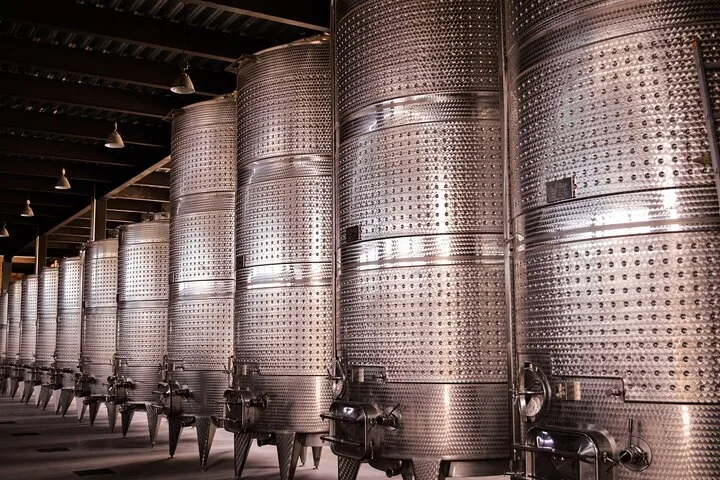
And if the comparative tasting leaves you wanting more, the next step is to visit: seeing the dry-farmed vine, the clay jar and the production hall without industrial makeup explains more than any label. At low-intervention houses, asking about the process is part of the visit.
Natural, organic and biodynamic answer the same question: how close can the glass be to the vineyard. When you want to see it at the source, the guide to touring the wine route without driving takes you there, and the one on how to read a wine label teaches you to recognize on the shelf what you learned here by name.
Share this story with whoever travels with you.