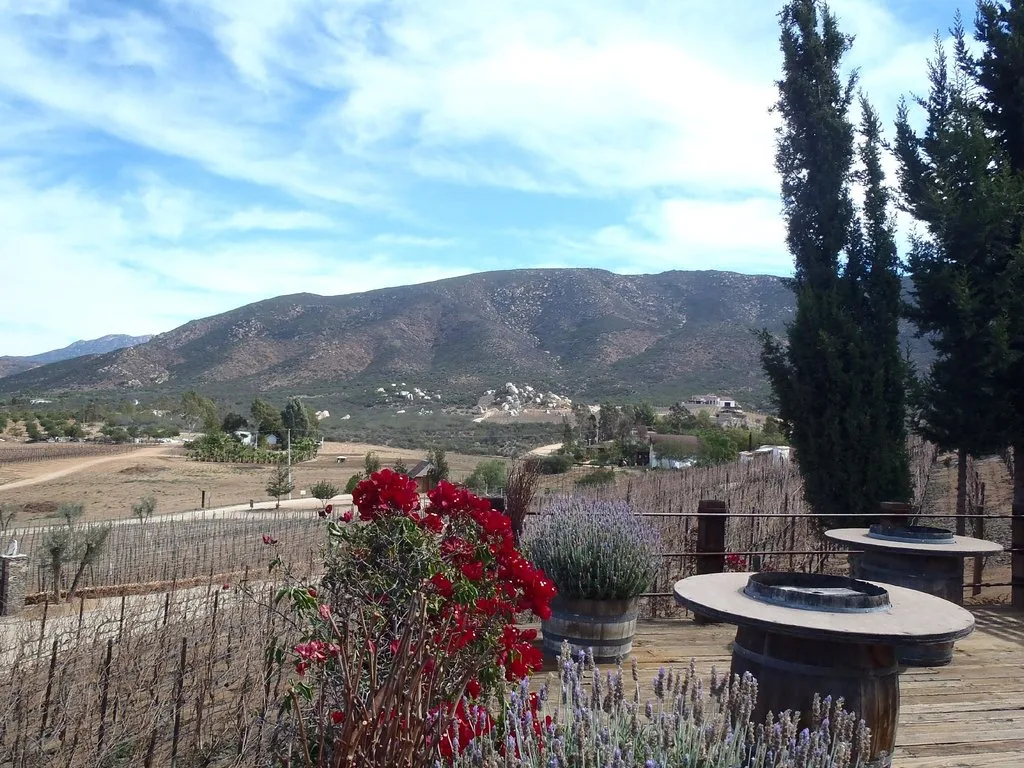
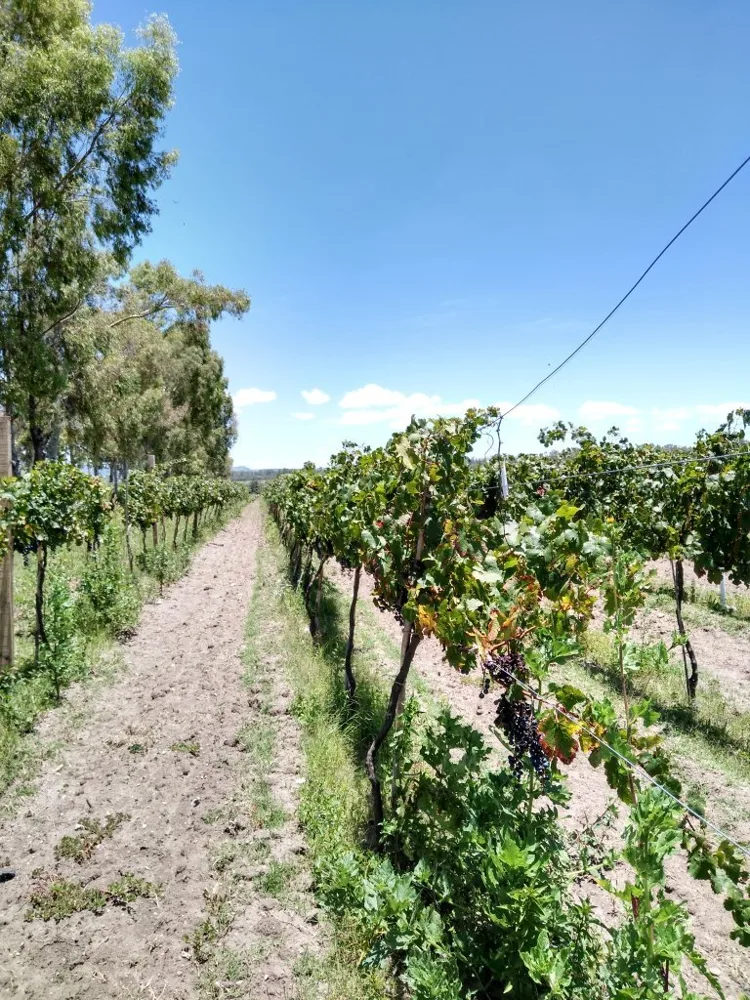
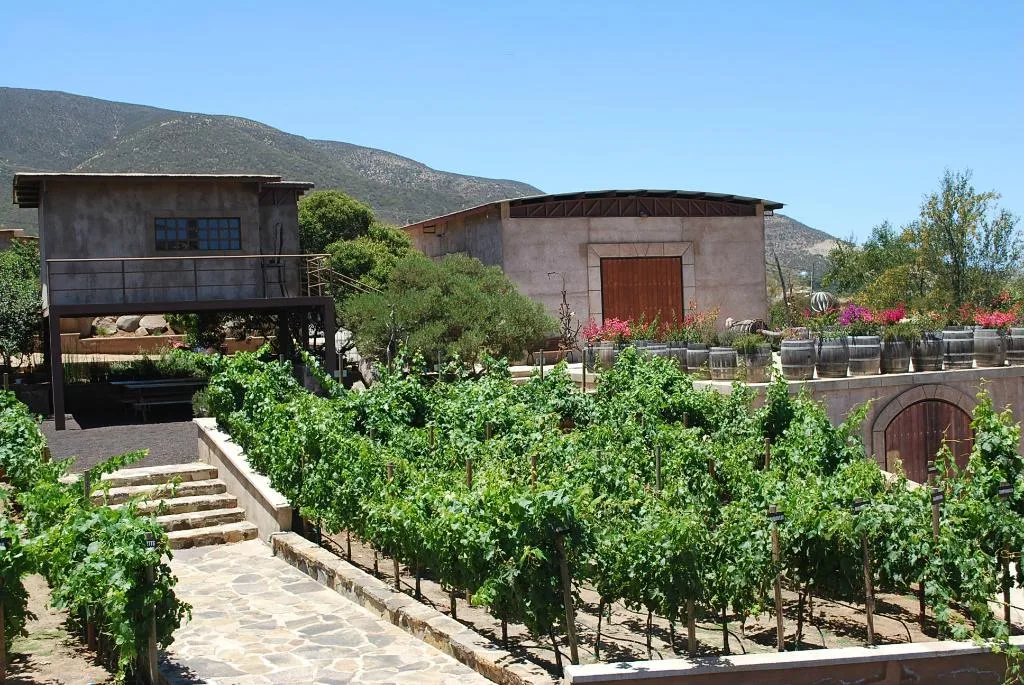
Mexican wines and grapesBaja CaliforniaCoahuilaGuanajuato
Mexican Orange Wine: What It Is, How It Is Made and Where to Taste It
Mexican orange wine is gaining interest: what it is, how it is made with grape skins, what it tastes like, what to eat with it and where to find it.

On the wine list it shows up as orange, amber or skin contact, and the first doubt is always the same: is it made with oranges? No. Mexican orange wine is white wine made as if it were red: the must ferments in contact with the skins of the grape for days, weeks or months, and from that come its coppery color, its texture with tannin and aromas that fit no other category.
Interest is growing. In Spain, Google searches for orange wine and skin contact wine grew between 11 and 15% over the previous year, part of a general shift by consumers toward the handmade and the fresh (the trade outlet Tecnovino, September 2026, a Spanish measurement, not a Mexican one). In Mexico there are already wineries bottling it under its own name, from Baja California to Coahuila and Guanajuato.
This guide answers the essentials: what exactly it is, how it is made, what it tastes like, what food it works with and where to taste it in Mexico, with listings from this site to put together a tasting.
What is orange wine?
It is wine from white grapes made with maceration: instead of pressing the grape and fermenting only the juice, the conventional white wine route, the producer leaves the must in contact with the skins, and sometimes stems and seeds, as is done with reds. The skins contribute color (from deep gold to coppery orange), tannins, body and a different aromatic profile: dried fruit, citrus peel, tea, spice, nutty notes.
The style is old, not an invented fashion. In the country of Georgia it has been made this way in buried clay vessels called qvevri for thousands of years, and on the border between Italy and Slovenia a group of producers revived it in the late 20th century. What is new is the commercial name and its global spread in recent years, hand in hand with the natural wine movement, with which it often overlaps even though they are not synonyms.
Three quick clarifications that save confusion at the bar: it contains no oranges or added citrus. It is not a rosé (rosé comes from red grapes with little skin contact). And it is not necessarily cloudy or odd: there are clean, refined, food-friendly oranges, and others that are rustic and wild. The range is wide, and that is the charm.
It also helps to tell it apart from its shelf neighbors. Compared with conventional white, orange has more body, tannin and aromatic complexity. Compared with rosé, much more structure and a dry, food-oriented profile. Compared with a light red, it shares the tannin but with the acidity of a white and aromas of stone fruit and peel instead of red berries. It occupies a territory of its own, and that is why some wine lists already give it a separate section.
How is orange wine made?
The process in four steps:
- Harvest of white grapes (though there are versions with some co-fermented red grapes). In Mexico there are oranges made from Chardonnay and Muscat, among other grapes.
- Maceration on the skins: the must lives with the skins from a few days to several months. More time, more color, tannin and complexity.
- Fermentation, often with native yeasts and in varied vessels: steel, old barrel, amphora or clay jar.
- Aging and bottling, in many cases without filtering or fining, which explains the slight haze in some bottles.
The chosen grape changes the accent of the wine: Chenin Blanc gives oranges of honey and ripe apple. Muscat gives intensely floral versions that brush against the exotic. Sauvignon Blanc keeps its citrus edge even with long maceration. In Mexico, where those three grapes are already planted and proven, the raw material for the style existed before the style had a commercial name.
The vessel matters. Amphorae and clay jars, which some Mexican projects use, allow micro-oxygenation without adding wood flavor, and the result is usually earthier and more textural. Old barrels soften. Steel keeps the fruit. Anyone who tastes three oranges from different vessels understands the style in a single afternoon.
Maceration time is the other deciding variable, and it often appears on the back label. A short maceration, of days, gives a wine barely golden, fresh and floral, with the tannin almost imperceptible: the easiest way in for someone coming from white. A maceration of months goes fully into deep copper, black tea, walnut and a firm grip in the mouth: the territory of someone looking for structure.
What does orange wine taste like?
Imagine a white with the body of a light red. On the nose: candied orange peel, dried apricot, black tea, honey, dried flowers, sometimes walnut or a mild curry. In the mouth: the acidity of a white plus a fine tannin that gives grip, something no conventional white offers. The finish is usually long and slightly bitter, like tea or grapefruit skin.
That combination of acidity, tannin and elegant bitterness is what makes it so food-friendly. It is also what throws a first-timer off: if you expect a fresh, fruity white, the first taste surprises. The key is to treat it as a category of its own, not as a white that came out strange.
Serving tip: do not serve it ice cold. Between 54 and 57°F (12 and 14°C), the temperature of a light red, the aromas open and the tannin softens. Ice cold, it closes and hardens. If you want to review the basics before tasting, the guide to how to taste wine works just as well for this style.
And if something shows up on the nose that you cannot identify, such as citron, sherry, dry grass or a hint of curry, do not rush to judge: those are normal notes of the style, especially in unfiltered versions. What is a real alarm signal is the smell of a damp rag or rotten eggs, which is a flaw in any wine, not orange character. The difference between rustic and spoiled is learned in two or three bottles.
Who makes orange wine in Mexico?
The Mexican orange scene lives mostly in the low-intervention wineries. One project often cited is Bichi Wines, from Tecate, founded by the Téllez family: it works old vines grown without pesticides, ferments with native yeasts and has experimented with skin-contact wines and pét-nats that are sold in natural wine shops in several countries (Kavasoft, 2026). In Guanajuato, projects such as Octágono work clay amphorae and local grapes in the same spirit (Yahoo Vida y Estilo, 2024).
In this directory, several houses have it documented on their listings. In Parras, Coahuila, the RGMX winery presents itself as a pioneer of orange wine in the country. In Guadalupe Valley, the Bruma house has an orange in its Casa Jipi line. And in San Miguel de Allende, Guanajuato, Dos Búhos bottles one of Moscato Giallo from its certified-organic vineyard, while Cava Garambullo makes Rover, a skin-maceration orange in a Chardonnay version and a blend.
Tip
At the bar of any winery, ask directly: ¿Tienen algún naranja o skin contact? (Do you have an orange or a skin contact wine?). If there is one outside the standard tasting, that is how you find out.
To taste without traveling, Mexico City has natural wine shops and bars with lists that change: Vinos Chidos, in the Condesa neighborhood, sells natural wines from small producers, and Cicatriz Café, in the Juárez neighborhood, is a natural wine bar at night. On their listings you can request the contact details and ask whether they have a Mexican orange that week.
What food goes with orange wine?
This is where orange shines. Its combination of acidity and tannin lets it go where a white cannot reach and where a red is too much:
- Spiced Mexican cooking: mole amarillo, cochinita, adobos. The tannin talks with the dried chile.
- Seafood with character: grilled octopus, garlic shrimp, shrimp aguachile cured a long time.
- Mushrooms and roasted vegetables: the earthy note of the style embraces umami flavors.
- Medium-aged cheeses: the classic pairing for skin-contact wine in all its homelands.
- Korean, Thai or Indian food: few glasses stand up so well to heat and complex spice.
The piece on which wine goes with Mexican food covers pairing in general. Think of orange as the wild card for dishes that fall between two worlds: too intense for a white, too delicate for a barrel-aged red.
Why is it trendy and what does it cost?
Tecnovino ties the growth of those searches in Spain to interest in freshness and handmade methods. It also helps that the style is photogenic, since that coppery color begs for a camera, and that natural wine bars have put it on their lists. It is, besides, a conversation wine: every bottle comes with a story of technique and producer.
There is also a supply reason: for a small winery, orange does not require new barrels, since clay or old barrels work, and it sets the house apart on a shelf full of Cabernet.
On price, Mexican orange lives in the artisan segment: small runs, handwork and little scale, and that shows on the label. The way to try it without buying the whole bottle is to order it by the glass where they have it open.
And a buying warning: the style is prone to bottle-to-bottle variation when it is made without sulfites or filtering. Buy at a store with good turnover and a cool cellar, and once it is open, cap it, keep it in the refrigerator and drink it within a few days.
Is the artisan price worth it? It depends on what you look for in the glass. If your measure is volume per peso, the conventional white in the guide to Mexican white wines goes further. If your measure is conversation per bottle, orange is about as complete as it gets: each house interprets it differently, each vintage changes and every bottle opened gives you something to talk about.
How do you put together your first orange tasting?
- Get two bottles: one from Baja California and, if you can, one from Guanajuato or Coahuila, to compare climates.
- Serve at 54 to 57°F (12 to 14°C), in a large white wine glass or a light red glass.
- Taste first on its own: color, nose, tannin. Then with spiced food or cheese.
- Note the maceration time (it usually appears on the back label): it is the fact that explains most about each bottle's style.
- If one seems too rustic, do not close the door: try another house before judging the whole style.
Tip
If you come from the red wine world, start with a long-maceration orange: the tannin will make you feel at home. If you come from white, start with a short-maceration one, fresher and more floral.
Orange wine tends to need a second taste: the first throws you off and the second already makes sense. When you want to follow the thread, the guide to natural wines in Mexico is the natural continuation, and the one on Mexican white wines gives you the point of comparison with the conventional style.
Share this story with whoever travels with you.