How to Taste Wine: A Guide to Your First Tasting, at Home or at a Winery
How to taste wine step by step: what to look for in the glass, what temperature to serve it at and what to expect at a first tasting in a Mexican winery.

The first time someone pours you a wine and waits for your opinion, the silence feels heavy. You swirl the glass because you have seen it in the movies, bring it to your nose and are not sure what to look for. Learning how to taste wine does not require textbook vocabulary. You look, you smell, you taste and you decide, in that order and without hurry. The strange words come later, with practice, and many are never needed at all.
Tasting is paying attention with a method. It helps you understand why you like a wine or not, compare it with another and order better next time, at a restaurant, in a store or at the bar of a winery. There are no wrong answers about what you feel, but there is an order that helps you feel more.
What follows works the same at the dining room table as in the tasting room of a winery in Guadalupe Valley (Valle de Guadalupe), Baja California, in Parras or in San Miguel de Allende, when the person pouring is the person who made the wine.
What do you need for your first tasting at home?
No special equipment. The essentials fit on a table:
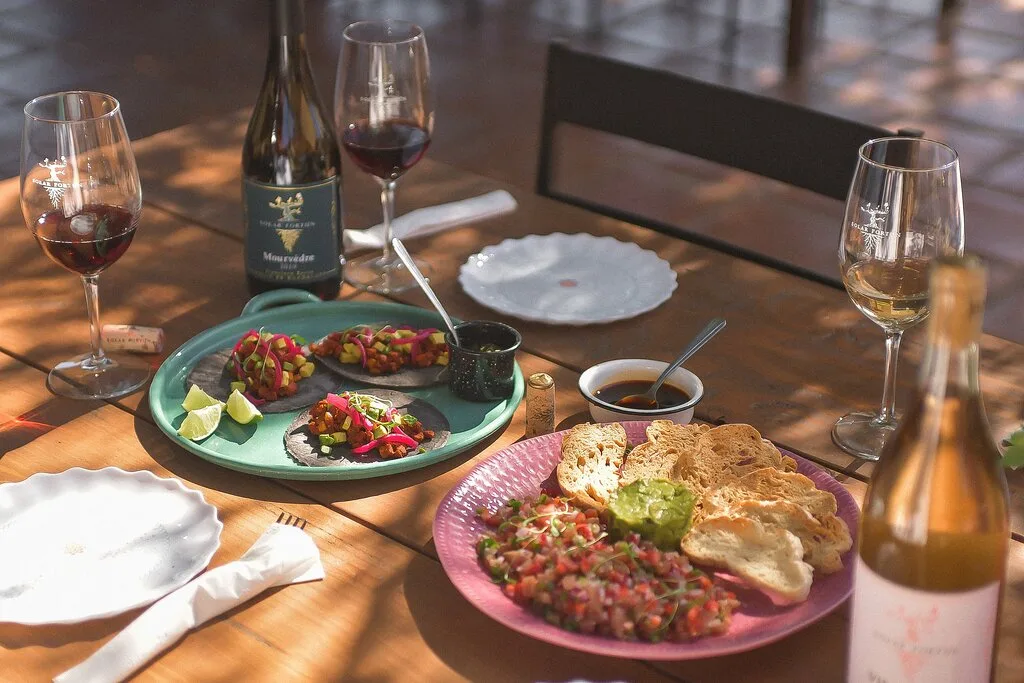
- Clear glass, tulip-shaped wine glasses, one per wine if you can. Pour a third of a glass or less. The empty space lets you swirl the wine and concentrates the aroma at the mouth of the glass.
- Natural light and a white background, a napkin or a sheet of paper, to see the color without being fooled.
- Water and plain bread or unsalted crackers to clean your mouth between wines.
- An opaque cup or a pitcher to serve as a spittoon. Spitting is not rude. It is how professionals keep a clear head.
- A notebook, or the tasting sheet you will find below.
- Three to five wines. That is enough to compare and few enough that you will not get lost.
Order matters: from light to intense and from dry to sweet. A simple sequence starts with a sparkling wine or a white, continues with a rosé, moves to a young red and then to one aged in barrel, and ends, if you have one, with a sweet wine. Avoid strong perfumes, do not taste on an empty stomach and do not do it right after brushing your teeth, because mint masks everything else.
What temperature should each wine be served at?
Temperature changes what you perceive. Very cold, a wine barely gives off aroma and acidity rules. Above 68°F (20°C), Spain's consumer organization, the Organización de Consumidores y Usuarios (OCU), warns that the alcohol shows a lot and sweet flavors are accentuated. As a starting point, these are the ranges that serving guides usually suggest:
- Sparkling wines: very cold, 43 to 46°F (6 to 8°C). How to open them without losing the bubbles is in our guide to Mexican sparkling wines.
- Young whites and rosés: 46 to 50°F (8 to 10°C).
- Full-bodied or barrel-fermented whites: 50 to 54°F (10 to 12°C).
- Young or light reds: 54 to 57°F (12 to 14°C).
- Barrel-aged reds: 59 to 64°F (15 to 18°C).
In much of Mexico, room temperature is almost never serving temperature. A hot afternoon leaves any bottle far above those ranges. If the red feels warm, put the bottle in a bucket of ice water for a few minutes. If the white came out of the refrigerator icy, let it warm up in the glass while you look at it.
Tip
A red that is a little cold warms up in the glass in a few minutes, while a warm one takes much longer to fix. If in doubt, serve it cooler.
What are the steps for tasting a wine?
The Wine & Spirit Education Trust (WSET), the British wine education school, organizes its tasting method in four moments: appearance, nose, palate and conclusions. That same logic, told without technical terms, looks like this:
- Look. Tilt the glass over the white background and observe two things: the intensity of the color, from pale to deep, and the hue. Whites run from lemon yellow to gold or amber, rosés from salmon to pink, and reds from purple to ruby or garnet. Tones that lean toward brick red usually give away a wine with some years on it.
- Smell. First with the glass still, then swirl it for a few seconds and bring it close again. Ask yourself how intense the aroma is and what it reminds you of: lemon, apple, strawberry, cherry or plum, flowers or herbs, spices, vanilla, toast or coconut, notes that usually come from the barrel. Naming it in your own words is worth more than guessing someone else's.
- Taste. Take a medium mouthful and move it all around your mouth. Notice five things: whether it is dry or sweet, the acidity, which you notice in how much you salivate, the tannin, that roughness that dries your gums like very strong black tea, the alcohol, which feels like warmth on the way down, and the body, the weight of the wine on your tongue, like the difference between skim and whole milk.
- Decide. After swallowing or spitting, count how many seconds the flavor lasts. That is the finish, and a long one is usually a good sign. Then ask yourself whether there is balance, whether no element overwhelms the others, and if you would pour yourself another glass. That last answer is worth as much as any score.
There is a reason tasters slurp noisily. With wine in the mouth, aromas rise to the nose from behind the palate, and many show up when you taste rather than when you smell. You do not need to make noise, but you do need to keep the wine in your mouth for a couple of seconds before swallowing.
To swirl the glass without spilling, rest it on the table and draw small circles with the base. The movement aerates the wine and lifts its aroma, which is why glasses are filled so little.
How do you describe a wine without sounding like a textbook?
The temptation is to copy the back label. It works better to use your own comparisons and master five ideas:
- Dry or sweet is about sugar, not texture. A red can feel rough and be dry, or silky and be dry too.
- Acidity is freshness: the quality that makes you salivate, like a wedge of orange.
- Tannin is texture: it dries the mouth like strong black tea. It comes mostly from the skins and seeds of the grape, and also from the barrel.
- Body is weight: light, medium or full.
- Finish is duration: short, medium or long.
With that you can put together a complete note in two lines. For an imaginary red, it might read: intense ruby, smells of plum and a little vanilla, dry, medium acidity, firm tannin, full body, long finish, and I would serve it with grilled beef. That is a real tasting note, and it is yours.
When you cannot find the word, look in your own kitchen: hibiscus, guava, piloncillo (unrefined cane sugar), ancho chile, café de olla (spiced coffee). A precise note does not have to sound like a book. It has to help you remember the wine. If a soft red and a sweet one still get mixed up for you, in our guide to soft and sweet red wines we separate tannin from sugar with examples from Mexican wineries.
What happens at a tasting at a winery in Mexico?
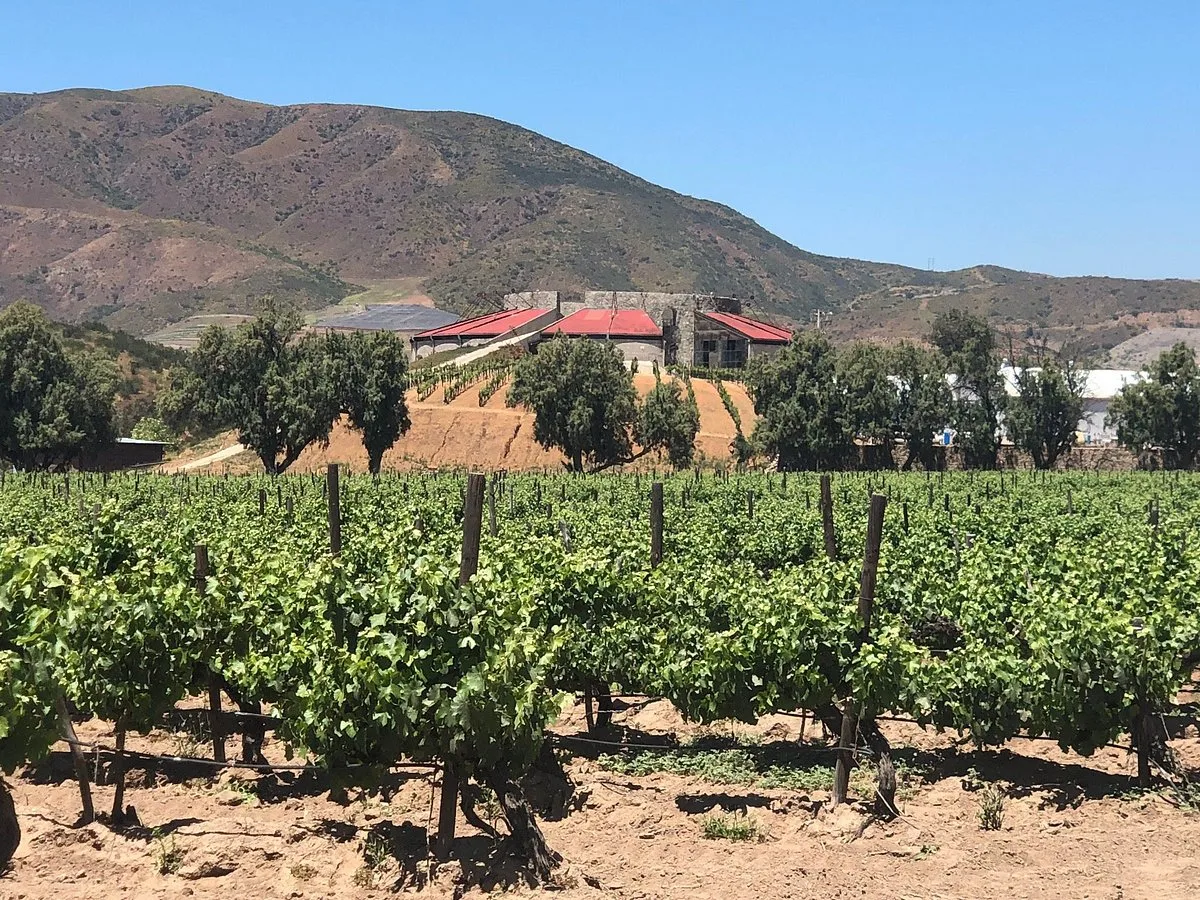
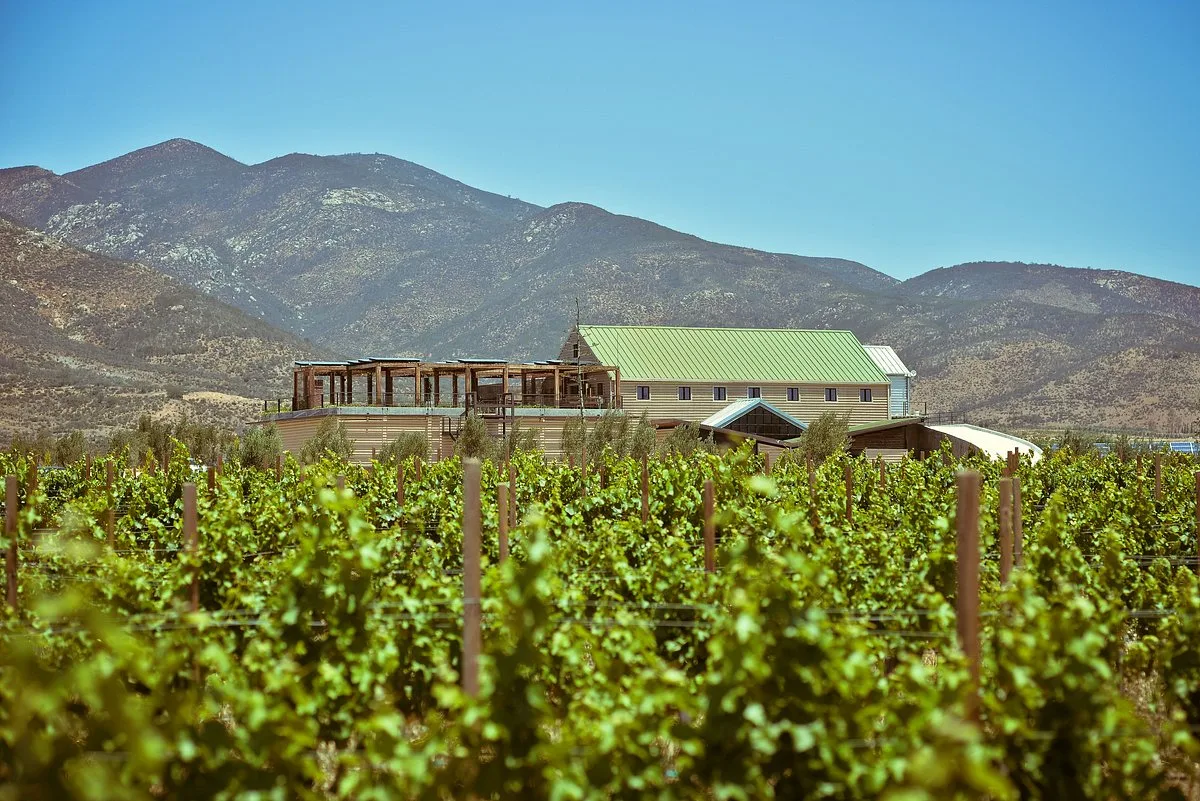
At a vineyard, the tasting usually starts with a walk among the vines and through the winery and ends in a room or on a terrace with several glasses poured in order. The format changes from house to house, as these profiles from our directory show:
- Viñedos Don Leo, in the Valle del Tunal, in the municipality of Parras, grows grapes at about 6,900 ft (2,100 m). Its vineyard and winery tour ends with three wines and is done only with a confirmed reservation.
- Fratelli Pasini, a family house with grapes from Guadalupe Valley, pours three wines with regional cheeses. The tasting is booked through its official site.
- Cuatro Cuatros, in El Sauzal de Rodríguez, facing the Pacific, leads a four-wine tasting, each wine with a bite chosen for it.
- Bodega Dos Búhos, on the outskirts of San Miguel de Allende, tours the vineyard and winery and pours four wines in a visit of about two hours.
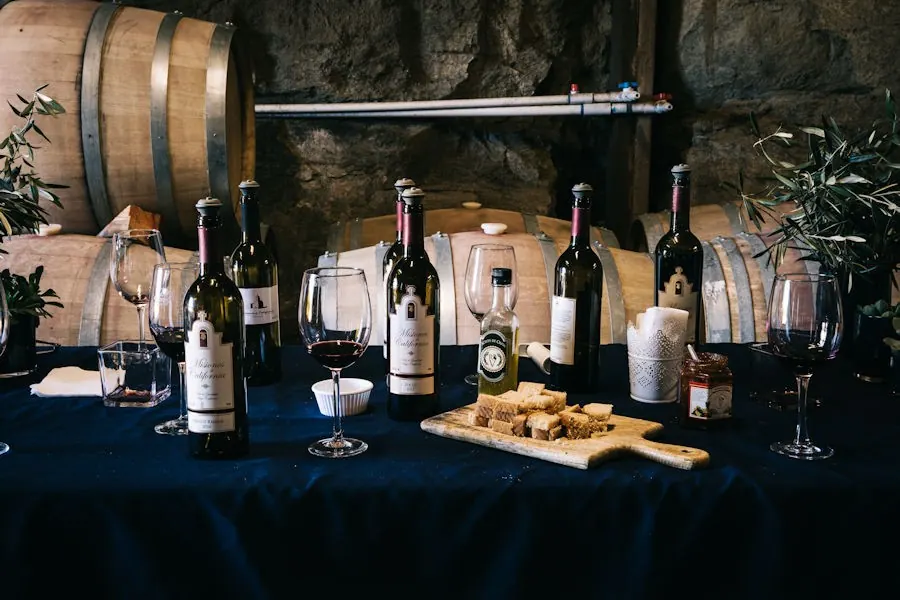
- Rondo del Valle, in San Antonio de las Minas, offers a five-wine tasting, three reds, a rosé and a white, and a blind tasting with artisanal chocolates in its underground cellar.
The usual setup is three to six wines in small pours, from white to red. Whoever is serving you tends to say which grape it is, which vineyard it comes from and how it was made. This is your moment to ask. If the tasting includes bites, try each wine first on its own and then with its companion. That difference is also part of the lesson.
If you are offered a blind tasting, accept. Tasting without seeing the label forces you to pay attention to the wine and not to its reputation. At home you can imitate it with numbered paper bags over each bottle. At the end, uncover them and compare your notes with what each label says. October 7, Mexican Wine Day, is a good excuse to do it with bottles from three states of the country.
Cities and Wines of Mexico does not book visits. Each winery sets its own hours, capacity and prices, and many ask for a reservation, so write or call them before you set out.
Do you spit wine at a tasting? Frequently asked questions
- Is it okay to spit? Yes, and at long tastings it is the sensible thing to do. If you do not see a spittoon, ask for one. You can also leave wine in the glass. Nobody expects you to finish every pour.
- What if I do not like a wine? Say so naturally and, if you can, explain why: that it feels very tart to you, or that you like the oak less. With that clue, the person serving you can recommend something more to your taste.
- Can I go without knowing anything about wine? That is what tastings are for. The best questions are usually the simplest ones.
- Who drives? Decide before you leave. If everyone wants to taste, book a tour with transportation or designate someone who will not drink.
- Can minors come along? Tastings are only for adults of legal age. If you are traveling with children, ask beforehand what they can do during the visit.
What should you ask at a tasting to learn more?
Questions turn a tasting into a class. These work at any winery:
- Which grape or grapes does it contain and which vineyard does it come from?
- Did it go through barrel? For how long and in what kind of oak?
- What year is the harvest from and what was that year like in the valley?
- At what altitude are the vines and how does the climate show in the wine?
- What food would you serve it with?
- Where can I buy it afterward?
Tasting sheet: a template to print
Copy these fields into a notebook or onto your phone and fill in one for each wine. After five or six tastings you will start to see patterns in what you like and what you do not.
- Wine: name, winery, grape and year.
- Sight: intensity and color.
- Nose: intensity and three aromas you recognize.
- Palate: dry or sweet, then acidity, tannin, alcohol and body, each low, medium or high, and a short, medium or long finish.
- Conclusion: is it in balance? Would you buy it again? What dish would you serve it with?
Tip
Mark with a star the wines you would have again and write next to each a phrase saying why. A year from now, those phrases will tell you what your style is better than any label.
Where can you practice what you learned?
Festivals let you compare many wineries in a few hours. In the fall, the Festival del Vino Queretano closes Querétaro's harvest season, and every November Catando México brings together producers from several regions in the historic center of Guanajuato. The dates of each edition, with their sources, are in our wine events calendar. Bring your sheet, taste a little at each table and use the spit bucket without embarrassment.
At a festival, arrive early, eat something beforehand, drink water between tables and pick a route: only whites and rosés, a single grape or a single region. Thirty wines at random tire the palate, while ten chosen with intention teach you something.
The tastiest practice happens at the table. Once you can tell acidity from tannin, notice how a wine changes next to tacos with lime or next to a mole, with our guide to pairing wine with Mexican food.
And for the full version, with the vineyard in view, pick a house in the directory of Mexican wineries (in Spanish), write to reserve and bring your sheet. When you leave, write down the two wines you liked most and why. The next bottle you buy, you will choose with those two lines.
Share this story with whoever travels with you.