Routes and getawaysBaja California
Ensenada and Guadalupe Valley in 4 Days: An Itinerary of Wine, Lobster and Seafood
Four days between Puerto Nuevo, Guadalupe Valley and Ensenada: which wineries to visit, where to eat, what to book and how to get around without driving.

In Puerto Nuevo the lobster reaches the table fried and red, with rice, beans and flour tortillas, a few steps from the Pacific. At that hour the trip is only beginning. This itinerary covers Ensenada and Guadalupe Valley (Valle de Guadalupe) in 4 days, with wine and food as the thread: a lunch by the sea on the way down from Tijuana, two days among the wineries of El Porvenir and San Marcos, one in San Antonio de las Minas, at the southern entrance to the valley, and a last morning of seafood and cellars in the center of the port before heading home.
We published the first version in 2023 and in October 2026 we redid it stop by stop, with what the profile of each winery and restaurant says. Laja, the first-day dinner in that version, has closed. Doña Esthela's kitchen takes no reservations, and the five tastings in a row on the second day were spread out, no more than two a day. Cities and Wines of Mexico does not take reservations. You request each appointment from the house itself.
If you have only a weekend, our two-day itinerary for Guadalupe Valley covers other wineries, one zone a day. This plan takes twice the time, visits different houses and leaves room for what two days cannot hold: the coast's lobster, a long dinner under an oak tree and the return through Ensenada's seafood.
How do you get there from Tijuana or San Diego?
The most practical entry point is Tijuana International Airport. Several rental agencies have counters at the airport itself, and a car gives you the freedom for a trip that goes down the coast, up to the valley and back. The valley is a little over 60 miles (100 km) from Tijuana and about 16 miles (25 km) from downtown Ensenada, and from Ensenada to Tijuana it is about 62 miles (100 km) on the scenic toll road, between an hour and twenty minutes and an hour and a half of driving without counting stops.
If you come from San Diego, check beforehand how you will cross. The Cross Border Xpress is a pedestrian bridge that connects San Diego with the Tijuana airport, but it is only for passengers with a flight to or from that airport and has its own ticket. It works if your trip includes a flight that leaves from or arrives at Tijuana. If you cross by car, you need Mexican auto insurance, because US policies are not valid in Mexico. If the car is rented, ask first whether the rental company allows it to be brought to this side. And if you want to change a stop, the Baja California wineries page has every house in the region with a profile.
Where should you sleep so you do not change hotels every night?
A single base for the three nights saves suitcases and check-ins. El Porvenir sits in the middle of what you cover the first two days, and from there San Antonio de las Minas and Ensenada are on the way to the coast. Three options, depending on the kind of trip:
- A hotel inside a winery. El Cielo Valle de Guadalupe, at km 7.5 of the Guadalupe-El Tigre road, in El Porvenir, has about 80 rooms and suites spread across villas among the vineyard, with two restaurants and the winery on the same grounds.
- A family house. Casa Emiliana, on Calle Zapata in El Porvenir, receives guests with breakfast in a house of a few rooms run by the owners themselves. Because of its size, it is the first thing to reserve.
- A cabin in the south of the valley. The EcoLodge at Clos de Tres Cantos, at km 89 of the Tecate-Ensenada highway, in San Antonio de las Minas, has cabins with a view of the vineyard and the hills, with continental breakfast. It leaves you closer to Ensenada on the last day and somewhat farther from El Porvenir the first two.
If you prefer another style, in our list of vineyard hotels are the Baja California wineries that receive guests, with what each offers.
What should you do on the first day, from Puerto Nuevo to the valley?
The times for each day are approximate and serve to divide up the day. Confirm each schedule when you book.
- 9 a.m., Tijuana. Landing and picking up the rental car at the airport.
- 11:30 a.m., Puerto Nuevo. Early lobster lunch at Villa Ortega's, on Calle Barracuda, with dining rooms that face the sea.
- 1 p.m., the road. Along the coast to El Sauzal and, from there, inland on federal Highway 3: about an hour to the valley.
- 2:30 p.m., El Porvenir. Tasting on the terrace of Las Nubes Bodegas y Viñedos, with regional cheeses and cured meats.
- 4 p.m., El Porvenir. Tasting in the room at Casa Emiliana, with the family that makes the wine. You must let them know before arriving.
- 5:30 p.m., hotel. Arrival and a while on the terrace.
- 7:30 p.m., El Porvenir. Dinner at one of the two restaurants at El Cielo, with the table reserved beforehand.
Puerto Nuevo is a town of restaurants at the km 44.5 marker of the free (non-toll) Tijuana-Ensenada highway, south of Rosarito, that has lived off its lobster since the middle of the last century. It is fried and served with rice, beans, salsa and flour tortillas. Villa Ortega's prepares it in the style of the town, along with other seafood dishes. Its profile gives no hours, so call before setting out. Eating early has a practical reason: it frees the afternoon for the first two tastings without rushing on the road.
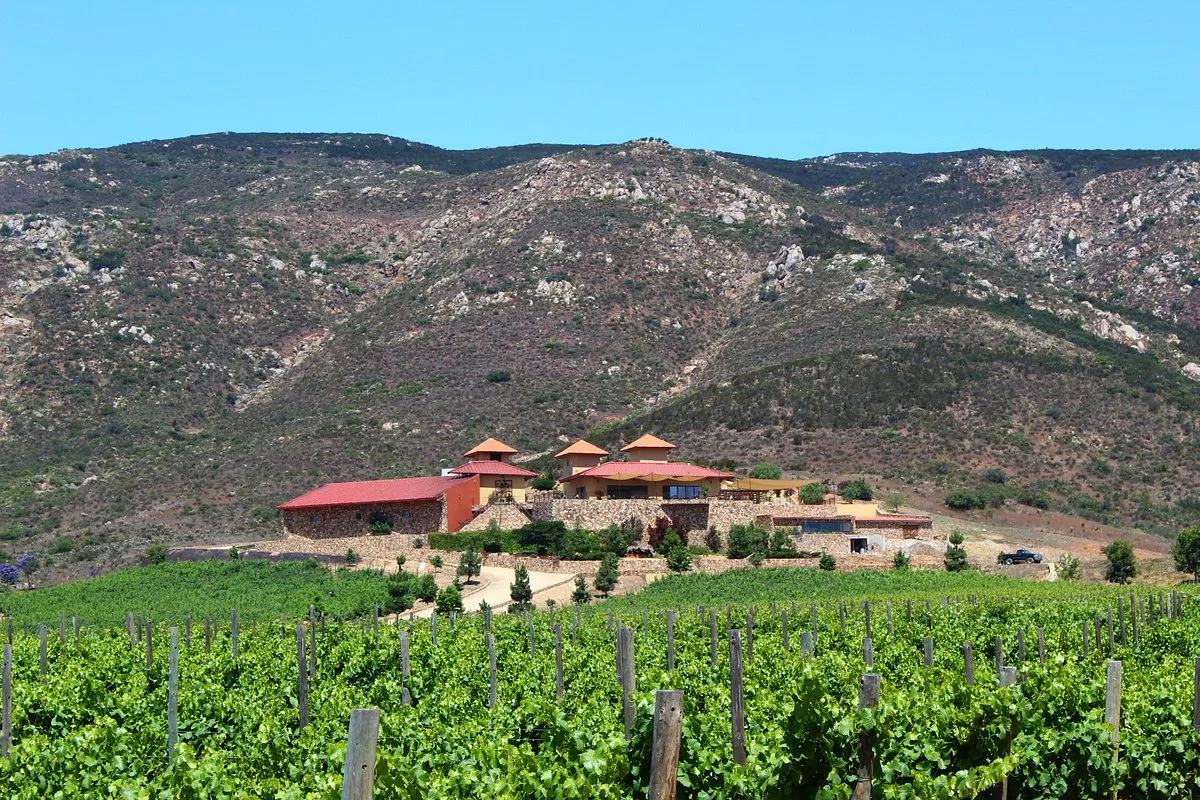
From the sea to the valley you climb through El Sauzal. The scenic road hugs the coast and federal Highway 3 goes in among stone hills until the first rows of vines appear. Las Nubes is the most flexible stop of the day, because it is open every day from 11 a.m. to 5 p.m., and its terrace, on the slope above El Porvenir, looks straight at the valley. Víctor Segura founded it in 2008 and named his blends after clouds. Cumulus, the reserve, combines Grenache, Cariñena and Tempranillo, and Nimbus adds grapes from the Valle de San Vicente.
Casa Emiliana changes the scale. Miguel Ávila Niebla and Laura Emilia, engineers, were looking in El Porvenir for a house for their retirement and ended up with 12 acres (5 hectares) of vineyard, a small winery and guests. The tasting is held in the living room, with the family, and the range is short, with reds, a rosé and Bella Mia, a Chardonnay sparkling wine. The night ends at El Cielo, where every label carries the name of a star or constellation, from Orion to Polaris, and dinner is served inside the same estate. If you sleep there, the way back is on foot.
What should you do on the second day, in the middle of the valley?
- 9 a.m., Rancho San Marcos. Breakfast at La Cocina de Doña Esthela, with no reservation.
- 11:30 a.m., San Marcos local road. Tasting and tour of the winery and cellar at La Lomita.
- 1:30 p.m., same property. Lunch at TrasLomita, the restaurant that shares property and parking with the winery.
- 4 p.m., next door. Tasting on the rooftop of Finca La Carrodilla, with the valley all around.
- 5:30 p.m., hotel. Rest before dinner.
- 7:30 p.m., km 83 of the Tecate-Ensenada highway. Outdoor tasting-menu dinner at Animalón, by Javier Plascencia, if its season is open.
Until dinner, the second day does not leave San Marcos. Doña Esthela began in 2008 selling burritos to the winery workers, and her kitchen, at the Rancho San Marcos in El Porvenir, now has a Bib Gourmand in the Michelin Guide Mexico 2026. The machaca (shredded dried beef) with egg and the roasted lamb are the house dishes. It closes on Mondays and takes no reservations, so count on a wait. Arriving early is what works.
La Lomita and Finca La Carrodilla belong to the same family and sit side by side, so from lunch to the second tasting there is almost no road. Fernando Pérez Castro founded La Lomita in 2009, and its house label is the Pagano, a pure Grenache in a square bottle. In 2011 the family launched Finca La Carrodilla as an agroecological estate: vineyard and winery certified organic, biodynamic practices and, besides wine, cheese, honey, preserves and olive oil. Its tasting is served on the rooftop, with the valley open all around. On weekends and at harvest, it is better to reserve.
The night is for Animalón, the restaurant Javier Plascencia opened in 2017 at km 83 of the Tecate-Ensenada highway: an outdoor tasting menu, under an oak tree, that changes with each season and that in the Michelin Guide Mexico 2026 keeps its star. It does not open all year. Before setting the dates for the trip, check on its site that the season is open and reserve there, online. If it is not, book another dinner near the hotel and leave the table under the oak for another visit.
What should you do on the third day, in San Antonio de las Minas?
- 10 a.m., El Porvenir. Head out to the south of the valley, with the wheel in the hands of whoever is not going to taste.
- 11 a.m., Villa de Juárez. Tasting on the terrace of Relieve Vinícola, on Calle Berilo.
- 1 p.m., km 89. Tasting in the room at Clos de Tres Cantos and lunch at Ariete, its restaurant.
- 4:30 p.m., hotel. Back to the base, or arrival at the cabin if you sleep at the EcoLodge.
- 8 p.m., near the hotel. A simple dinner, with no driving.
San Antonio de las Minas is the south gate of the valley and a different landscape: an area that for decades was olive groves and orchards and that gets the Pacific breeze in the afternoons, with small wineries, several of them family-run. It feels different from the second day, and in our guide to Guadalupe Valley wineries by zone are the other houses around it, in case you want to change a stop.
Relieve takes its name from the hills that enclose the valley. It is the winery of a family from the town, and today it is run by Wenceslao Martínez, producer and winemaker, who continues what his father started. It bottles its reds as single varietals. The most ambitious are Ovis, of Tempranillo, and Ciclo, of Nebbiolo, both with a year in barrel. They are tasted on its terrace. Its profile gives no hours, so confirm them before going.
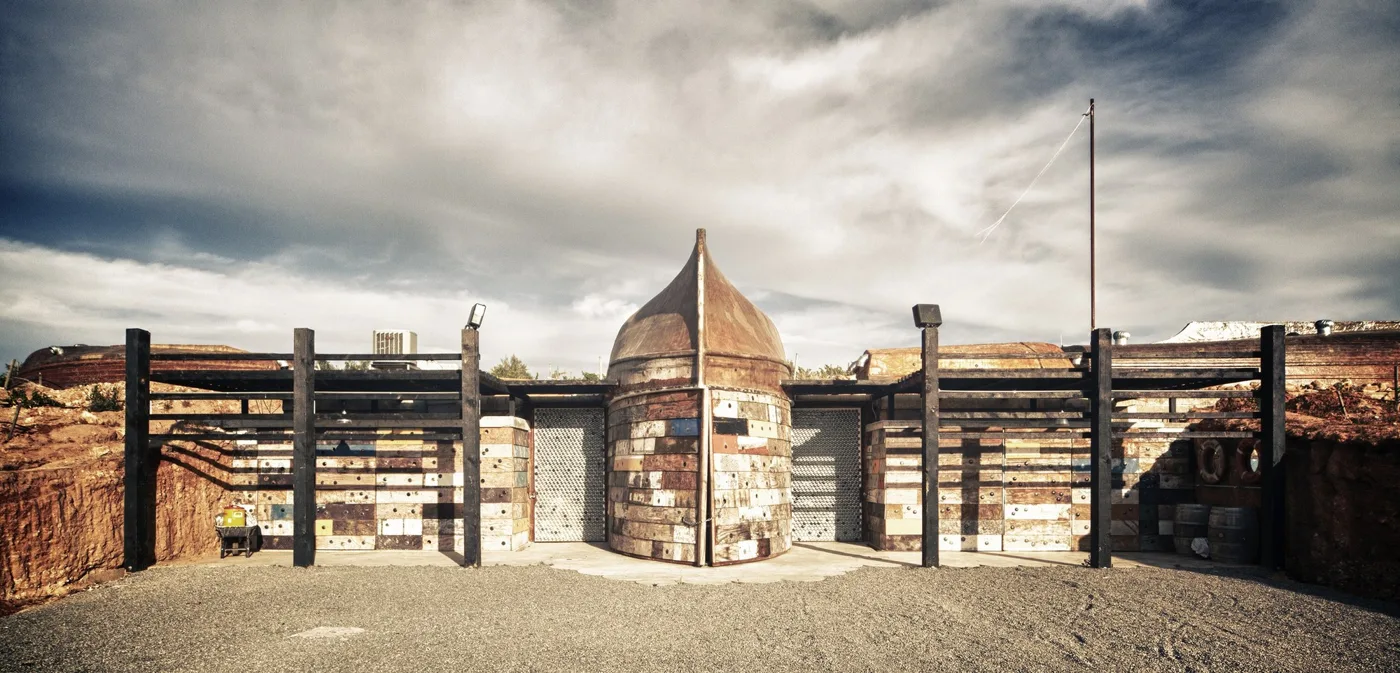
Clos de Tres Cantos looks like a monastery built from whatever was at hand: stone, wood and recovered bottles. It was designed by the architect Alejandro D'Acosta following the topography and the paths of the vineyard, and the house states that more than 90% of the materials come from the region. María Benítez and Joaquín Moya made their first wine in 2009. Today the vineyard is certified organic, the winery runs on solar power and Petite Sirah appears in several of its reds. It is open Wednesday to Sunday, from 10 a.m. to 5 p.m., and the tasting and the restaurant are booked on its site.
What should you do on the fourth day in Ensenada before heading home?
- 10 a.m., hotel. Check out and head down to Ensenada. From the middle of the valley to the center of the port is about 16 miles (25 km), around half an hour.
- 11 a.m., Avenida López Mateos and Alvarado. Tostadas and seafood cocktails on the street, at the cart of La Guerrerense.
- Noon, Avenida Miramar. Tour and tasting at the Miramar cellar of Bodegas de Santo Tomás.
- 1:30 p.m., Avenida Alvarado. Seated lunch at Mariscos El Güero: ceviches, tostadas and seafood cocktails.
- 3:30 p.m. Return to Tijuana along the scenic road.
The last day trades dust for sea salt. The three stops are in Ensenada's Zona Centro, and the first is a street stop. La Guerrerense is Sabina Bandera's seafood cart, on Avenida López Mateos, known as Primera, at the corner of Alvarado, where the tostadas and cocktails are eaten right there on the street. It closes on Tuesdays.
Bodegas de Santo Tomás tells its history from 1888, when Francisco Andonegui and Miguel Ormart bought land to plant vines in the valley of the same name, south of the port. Since 2019 the winemaking has been led by Cristina Pino. The house receives guests in three places: the winery in the Valle de Santo Tomás, the cellar in San Antonio de las Minas and the Miramar cellar, right in the center, the easiest to visit from the port. At all three there are guided tours and tastings, and a reservation is advisable. Among its reference reds is the Duetto, which combines Cabernet from the Valle de Santo Tomás with Tempranillo from San Vicente.
Mariscos El Güero closes the route. Open since 1981 on Avenida Alvarado, it serves tostadas, cocktails and ceviches every day from 10 a.m. to 6 p.m., hours made for lunch and for hitting the road in midafternoon. From Ensenada to Tijuana it is about 62 miles (100 km) on the scenic road and an hour and a half of driving. If you are going to cross to San Diego, add the wait at the border crossing.
Tip
On the last day, whoever drives back to Tijuana does not taste at the Miramar cellar. The bottles you buy travel closed in the trunk, and the coast road is better driven with a clear head.
How do you get around without driving after tasting?
The plan combines two tastings a day and several long meals, so the rental car is for the road between the coast and the valley. Getting back at night from a table calls for another solution. There are three:
- A driver in the group who does not taste, a different one each day if you take turns.
- A designated driver who drives your own car during the day, or a van with a driver by the hour.
- A tour with transportation for the second or third day, with the tastings already set up.
The formats and what to ask when hiring are in our guide to touring the wine route without driving. Inside the valley, ride-hailing trips are irregular and there are stretches without signal, so the ride back from the dinners at El Cielo and Animalón is arranged before sitting down at the table.
What do you need to reserve and how far ahead?
The hotel comes first. After that, whatever depends on someone else's calendar. This is the order, according to what each place's profile says:
- Lodging, as soon as you have dates, with weeks to spare if you travel in August or on a long weekend.
- Animalón, online, as soon as you confirm its season is open.
- Tastings by appointment: Casa Emiliana asks you to write or call beforehand, especially on weekends. La Lomita, Finca La Carrodilla, El Cielo and Santo Tomás recommend reserving, and Clos de Tres Cantos books the tasting and the restaurant on its site. Along with the tastings, reserve lunch at TrasLomita and dinner at El Cielo.
- No reservation: breakfast at Doña Esthela, which comes with a line. Las Nubes is open every day from 11 a.m. to 5 p.m., and Relieve needs its hours confirmed.
- Transportation or the driver, if nobody in the group is going to skip tasting.
Tip
Plan the trip from Thursday to Sunday. That way breakfast at Doña Esthela falls on a Friday (it closes Mondays), lunch at Clos de Tres Cantos on a Saturday (it closes Mondays and Tuesdays) and the La Guerrerense tostadas on a Sunday (it closes Tuesdays).
When is the best time to go and what does the trip cost?
The valley receives guests all year, but its calendar has a peak: the Fiestas de la Vendimia (the harvest festival) in August, which in 2026 ran from the 5th to the 30th, with more activities and more demand for hotels and tables. Outside August the bars are quieter, especially on weekdays. If your dates are flexible, our guide to the best time to visit Guadalupe Valley crosses weather, harvest and demand month by month. For this plan, Animalón's season also counts.
We give no prices here. They change with the season and with each house. To build the budget, our guide to what a trip to Guadalupe Valley costs breaks the spending into arrival, lodging, tastings, food and transfers, with verified and dated prices. On a trip like this, the line items that move the bill most are the hotel and the dinners.
Before buying the flight, make two checks: Animalón's season and a free date in the Casa Emiliana room. Those are the two appointments that depend on someone else's calendar. With them confirmed, the other pieces of the trip fall into place around them.
Share this story with whoever travels with you.