Routes and getawaysBaja California
Guadalupe Valley Wineries by Zone: How to Choose Where to Go
Guadalupe Valley wineries by zone: San Antonio de las Minas, El Porvenir, Francisco Zarco, the highway and El Sauzal, and which ones need a reservation.

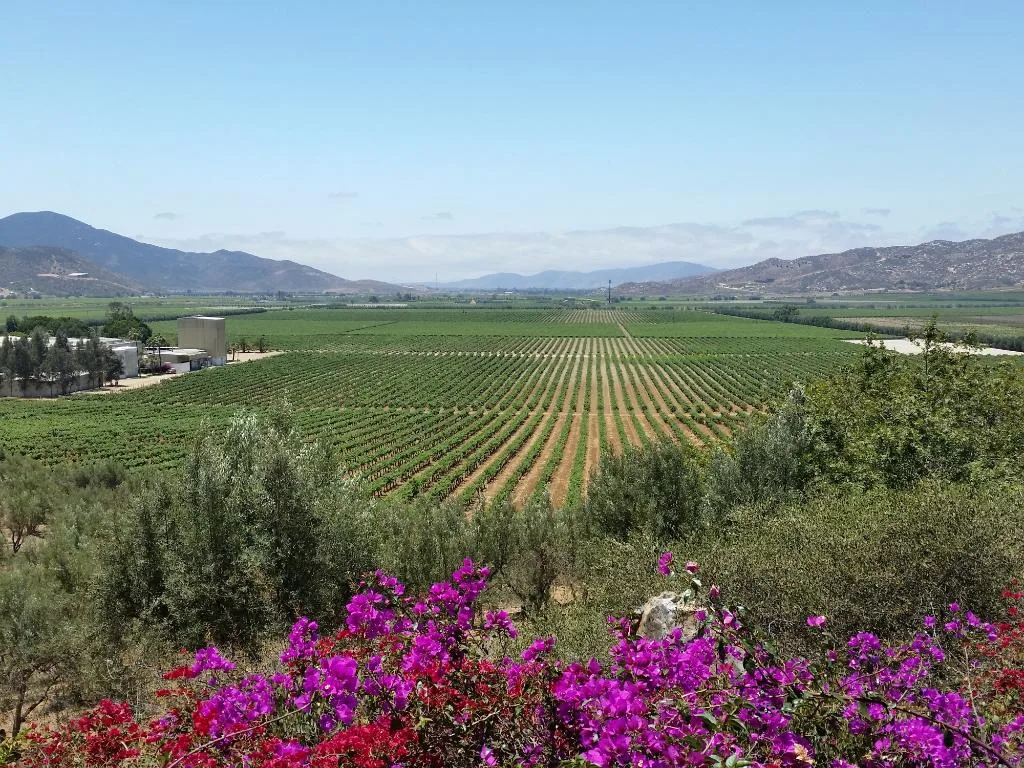
If you arrive from Ensenada on Mexico Federal Highway 3, within a few miles the air shifts from sea salt to dust: stone hills, rows of vines, ranch gates that open onto dirt roads. Choosing among the wineries of Guadalupe Valley (Valle de Guadalupe) can be overwhelming, because our directory alone has 72 listings for Baja California. The sensible way to decide is not by fame but by zone. The valley is a corridor, and crossing it end to end several times in a day is the recipe for spending more time behind the wheel than with a glass in hand.
Here we divide it into the zones that appear in the addresses of the wineries themselves: San Antonio de las Minas, to the south. Ejido El Porvenir. Francisco Zarco, at the center of the valley. The highway with its kilometer markers, San Marcos and Las Lomas. And the coast of El Sauzal. Then we head out to Ojos Negros, San Vicente, La Grulla, San Quintín and Tecate. For each zone we tell you which wineries ask for an appointment according to their listing. We do not publish hours or prices, because they change too much, and the site does not take reservations: each visit is arranged with the winery.
Where is Guadalupe Valley and how are its wineries arranged?
The valley belongs to the municipality of Ensenada and lies about 12 to 15 miles (20 to 25 km) north of the city on the Ensenada to Tecate highway, Federal Highway 3, and a little over 60 miles (100 km) from Tijuana. That highway is the backbone of the wine route: many wineries give their address by the kilometer marker where they sit, and the numbers grow as you come down from Tecate toward the coast. In our listings, Encino de Piedra is at km 10, already in Tecate. The valley stretch runs roughly from km 71 to km 94, and Viñas del Castillo, in El Sauzal, is at km 99.5.
Roads branch off the highway with their own kilometer counts, such as the Guadalupe to El Tigre road or the one to Francisco Zarco. That is why some addresses mention km 7.5 of El Tigre or km 3.6 of the road to Francisco Zarco: it is not a mistake, it is a different road.
Tip
Plan two or three wineries per day, all in the same zone. If you are going to taste, do not drive: in our section of places to eat, sleep and tour the valley (in Spanish) there are tours and a transportation service that cover the route.
Which wineries are in San Antonio de las Minas?
For anyone arriving from Ensenada, San Antonio de las Minas is the first zone of the valley, and in our directory it is one of the fullest, with 13 listings. Small projects abound, several with earth, stone or straw architecture, and some work by appointment only:
- Casa de Piedra, at km 93.5, is the family project that winemaker Hugo D'Acosta began in 1997. Tastings are requested online at least 48 hours ahead.
- Cava Maciel, from Ensenada-born winemaker Jorge Maciel, hosts tastings on a terrace with a view of the valley. With a reservation, he personally leads barrel tastings on weekends.
- Viñedos Mina Penélope farms its vineyards with organic and permaculture techniques. Its tastings require a reservation, and on the property is Malva, an open-air restaurant with a tasting menu that changes every week.
- Nativo Vinícola ties its wine to the culture of the native peoples of Baja California and has cabins to stay in.
- Misiones de California, from the Velasco family, specializes in reds and receives guests in a small building that recalls the Franciscan missions.
- Viña de Liceaga has a hacienda-style tasting room, the starting point for tours of the winery, vineyard and gardens.
Also in the zone, according to their listings, are Vinisterra, whose winery was built with brick made from the town's own earth, Vinícola Retorno, with cellar walls of straw bales and mud, Tres Valles, with a tasting room that looks like a tree house, and Rondo del Valle, which offers blind tastings with chocolate in its underground cellar.
Which wineries are in El Porvenir?
The Ejido El Porvenir (an ejido is a communally held farm community) is the zone with the most listings in our directory: 16, counting those that name it as their town and those that mention it in their address. The scale here is family-sized, and wineries such as Casa Emiliana and JC Bravo belong to the Asociación de Vinícolas de El Porvenir (the El Porvenir Wineries Association).
- Vinícola JC Bravo, from winemaker Juan Carlos Bravo, born in the valley, makes Palomino and Carignan from a vineyard more than fifty years old farmed without irrigation.
- Château Camou, with more than 25 years of history, leads tours of the pressing room, the fermentation, the barrels and the bottle cellar. Reserve at least three days ahead.
- Trevista Vineyards focuses on Tempranillo and offers tastings with tapas by appointment and prepayment only. According to the winery, it now schedules them on Saturdays.
- Valle Girl Vino, from winemaker Sitara Pérez, receives guests at El Corcho Rosa: you get there by following pink signs along the road to El Cielo, and there are wood-fired pizzas.
- Hilo Negro, with winemaking direction by Daniel Lonnberg, has its tasting room, Algaravino, at km 11 of the Francisco Zarco to El Tigre road, next to the restaurants Emat and Radix.
- El Cielo brings together a winery, vineyards, restaurants, a café and a hotel with villas.
- Finca La Carrodilla, from the family that owns La Lomita, describes itself on its listing as the first winery in the valley with organic certification.
Casta de Vinos also receives visitors by appointment or with notice. So do Vinícola Bajalupano, founded in 2014, which makes wine from grapes of Guadalupe, San Vicente and Ojos Negros, Casa Emiliana, which is also a guesthouse, and Rancho Santa María, whose opening days vary. In the same zone are Castillo Ferrer, with a hotel, Torres Alegre y Familia, Emevé, Decantos and Villa Montefiori.
What is there to see in Francisco Zarco, the former Russian colony?
Francisco Zarco, also known as the Russian colony, keeps the memory of Russian migration to the valley. Between 1905 and 1907 about 40 Molokan families arrived, a Russian-origin religious community, around 300 people, according to a study published by the Universidad Autónoma de Baja California. Its mark remains in the names: the address of Adobe Guadalupe, a winery and boutique hotel, still reads Col. Rusa de Guadalupe (Russian Colony of Guadalupe). In the valley, the Museo Comunitario Ruso (the Russian Community Museum) occupies a house built in 1905 and opened as a museum in 1991, according to the Sistema de Información Cultural (Cultural Information System).
- Monte Xanic was founded in 1987 by five friends and sits on the main street to Ejido Francisco Zarco. Its listing highlights the winery designed by architect Juan Garduño.
- Bodegas Henri Lurton is the project of the Bordeaux owner of Château Brane-Cantenac, in Margaux, and his children. Tour and tasting by reservation only.
- Shedeh, on the main street, hosts tastings in one of the property's old granaries, with seating for about twenty, and has a bistro next door.
- Vena Cava, founded in 2005, built its winery with recycled materials, among them old boats, according to its listing, which also says it requires a reservation and receives only guests over 18.
- Vinos Bibayoff, from a family descended from those Molokan settlers, has a small family museum at Rancho Toros Pintos.
Which wineries are on the highway?
Between km 71 and km 91, Federal Highway 3 strings together a good part of the valley's wineries. Ordered by the kilometer marker their listings give:
- Km 71: Viñedos de la Reina, with a tasting room and the restaurant Salve Asador Campestre, according to its listing.
- Km 73 and 73.5: Casa Pedro Domecq, with a museum, an underground cellar and visits with advance reservation, and L.A. Cetto, a house with roots in 1928, according to its listing, whose Nebbiolo has a story of its own that we tell in which grape the Mexican Nebbiolo really is.
- Km 75: Encuentro Guadalupe, a hotel with its own winery of about 10 acres (4 hectares).
- Km 81.5 and 82.5: Hacienda Guadalupe, which according to its listing shares a property with its restaurant and its hotel, and Vinos Lechuza, which receives only by reservation and serves country meals facing the vines.
- Km 83: Casa Magoni, from Camillo Magoni, whose experimental field gathers 70 grape varieties, according to its listing.
- Km 85.5 to 88.9: Mogor Badán, which according to its listing practices organic farming. Castillo Ferrer, at 86.3. Viñas de Garza, Cavas Sol y Barro and Vinícola 3 Mujeres, all three at 87, the last one by appointment only. And Xecué, at 88.9.
- Km 90.8: Vinícola Maglén, in Las Lomas, inside a complex with a hotel, restaurants and a brewery.
The San Marcos and Las Lomas zones add La Lomita, in San Marcos, Vinícola Roa, small and family-run, which opens mostly on weekends, and Alximia, on the local road from Las Lomas to El Tigre.
Are there wineries by the sea, in El Sauzal and Ensenada?
Yes, and they change the landscape completely. In El Sauzal de Rodríguez, north of Ensenada, Cuatro Cuatros has vineyards with a view of the Pacific. Viñas del Castillo is a winery and boutique hotel. And Vinícola Punto y Aparte, founded in 2019 by sommelier Pedro Poncelis, receives only private groups by reservation. Solar Fortún, whose vineyard is in the Cañada de Guadalupe, moved its production in 2020 to El Sauzal, facing the sea, according to its listing.
In the city itself there are three stops for a day without the highway: Bodegas de Santo Tomás, founded in 1888 according to its listing and with an address in downtown Ensenada, the tasting room of Vinos Rolu, whose vineyard is in San Vicente, and Cavas Valmar, a family winery from 1983 that schedules its visits by phone.
What other wine valleys are near Ensenada?
If you already know Guadalupe Valley, these valleys tell another part of the Baja California wine story:
- Valle de Ojos Negros, east of Ensenada: Bodegas San Rafael, from the Hussong family and a pioneer of the valley, schedules visits by phone. Vinícola Infinito, from winemaker Pepe Pedrosa, opens only by reservation and is part of the Ojos Negros cheese and wine route tours.
- Valle de San Vicente, south of Ensenada: Vinos Dubacano, a family winery from 1987, has its tasting room at km 101 of the Transpeninsular. Reserve online or by phone.
- Valle de la Grulla, about 25 miles (40 km) south of Ensenada: Viñedos Aldo César Palafox hosts tastings in an underground cellar or outdoors, among vineyards, oaks and gardens, on the old wine route.
- Valle de San Quintín: Vinícola de Becerra, the first winery project in the area, grows certified-organic grapes and has a tasting room in Vicente Guerrero.
- Tecate: Encino de Piedra, at the historic Rancho Tecate, at the northern entrance of the wine route, with a boutique hotel and restaurant.
Which zone should you choose and how many wineries should you visit?
Each zone answers a type of trip. This is the quickest way to decide:
- First visit and little time: the highway, between km 73 and km 91, puts big and small wineries a few miles from one another.
- Conversation with the person who makes the wine: El Porvenir and San Antonio de las Minas, with many family projects.
- History: Francisco Zarco and its Russian past.
- Wine with a sea view: El Sauzal.
- Without a car: sleep at a winery with a hotel, like the ones we gather in our list of vineyard hotels, or in Ensenada, and get around by tour or hired transportation.
- Something different: Ojos Negros or San Vicente.
As for the number, two or three visits per day are enough to taste calmly, eat well and get back in daylight. If you have only two days, our plan for a weekend in Guadalupe Valley already spreads them out by zone. Reserve ahead: more than a dozen Baja California listings say they receive only by appointment or advance reservation, and several more recommend confirming before you go, especially on weekends. How and how far ahead to ask for the appointment is in our guide to booking a winery visit.
When should you go to Guadalupe Valley?
The big moment of the year is the Fiestas de la Vendimia (the harvest festival), organized by Provino Baja California every summer. In 2026 its 36th edition ran from August 5 to 30, with more than 35 activities. Outside those weeks the wineries keep receiving visitors, with fewer people at the bars: confirm opening days and reserve, especially for weekends. For other dates of the year, check the wine events calendar, where we publish only verified dates.
With the zone chosen, open the Baja California wineries page and pick three listings in that same zone. Write or call with your date and book the first visit for midmorning. Make the last one close to where you are going to have dinner.
Share this story with whoever travels with you.