Guadalupe Valley Harvest Festival (Fiestas de la Vendimia): When It Is and How to Enjoy It
When the Fiestas de la Vendimia in Guadalupe Valley take place, what happens at the Muestra del Vino and the Concurso de Paellas, tickets and lodging.

The Fiestas de la Vendimia (the harvest festival) in Guadalupe Valley (Valle de Guadalupe), Baja California, are the month of the year when the region's wine leaves the cellars and sits down at the table with the people. In 2026 they ran from August 5 to 30, with more than thirty activities spread between Ensenada and the valley, and the Provino Committee, which organizes them, expected about 90,000 visitors.
The 2026 festival was the 36th edition. The 2025 one celebrated 35 years of festivals and 25 years of the Committee, with the theme Terruño, Identidad y Vocación (Terroir, Identity and Vocation). There are no official dates yet for 2027. The Committee announces them months ahead, and in 2025 it did so in early May. While the announcement is pending, the three most recent editions leave a useful pattern for planning, and this guide lays it out along with tickets, lodging and transportation.
The 2026 data come from the Provino Committee's events page, consulted on October 14, 2026, and from the press of each edition. For 2027 only the usual pattern is stated. The real date is confirmed by the organizer.
When are the Fiestas de la Vendimia in Guadalupe Valley?
The last three editions started on a Wednesday, between late July and early August, and closed in the second half of August:
- 2024, 34th edition: July 31 to August 18, according to a regional travel guide.
- 2025, 35th edition: July 30 to August 24, with the Muestra del Vino (the wine showcase) on Friday, August 1 and the Concurso de Paellas (the paella contest) on Sunday the 17th.
- 2026, 36th edition: August 5 to 30, with the Muestra del Vino on Friday the 7th and the Concurso de Paellas on Sunday the 23rd.
The pattern repeats: an opening on a Wednesday, the Muestra del Vino the following Friday and the Concurso de Paellas on a Sunday in August. The festival usually starts between late July and early August, judging by the last three editions. That is a habit, not a 2027 announcement, so do not put a hotel or a flight on a date the Committee has not yet given.
Which events open and close the festival?
The 2026 program had four central pieces, according to the Committee's page and the press of the edition:
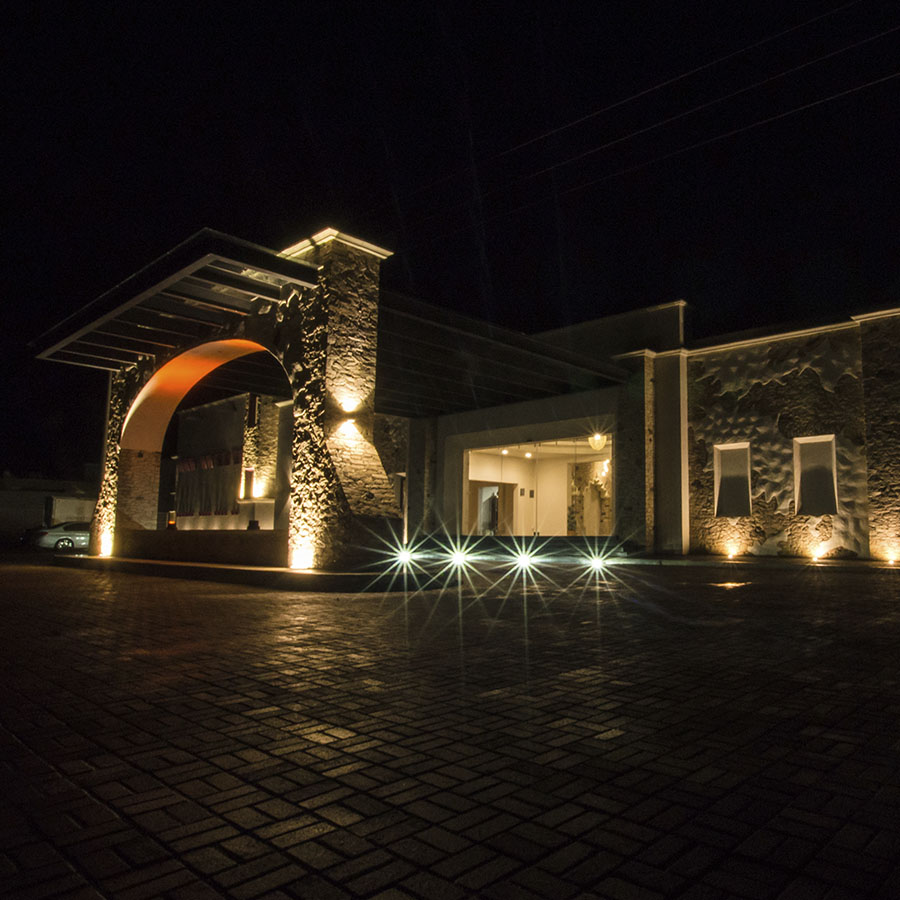
- Opening. Wednesday, August 5 at the Hotel Coral & Marina, in Ensenada, by invitation only.
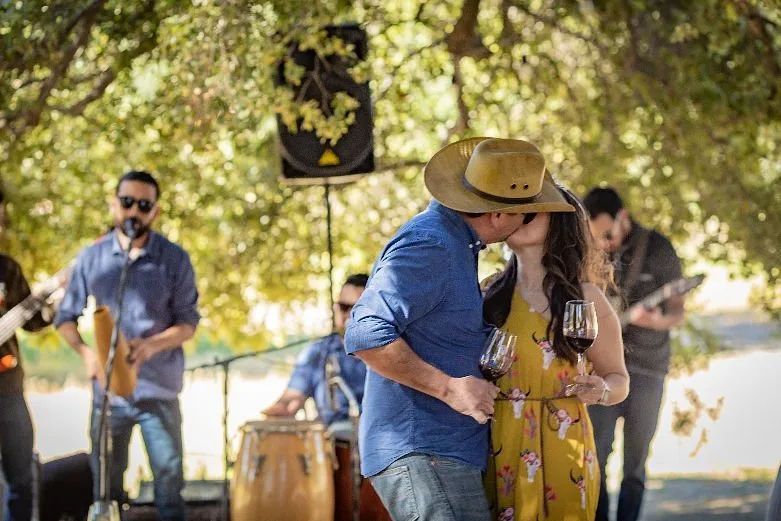
- Muestra del Vino. Friday, August 7, from 7 p.m. to 1 a.m., at the Centro Cultural Riviera de Ensenada. It brought together more than 80 wineries with more than 160 labels, 55 restaurants and five music stages. It is the event that gave rise to the festival.
- Wine tours. The Saturdays of August (the 8th, 15th, 22nd and 29th in 2026), guided tours of participating wineries, in groups of up to 20 people.
- Concurso de Paellas Dr. Ramón García Ocejo (the Dr. Ramón García Ocejo paella contest). Sunday, August 23, from noon to 7 p.m., at the Viña de Liceaga winery, with 94 teams. It closes the program.
Around those dates there were more than thirty activities: winery tours, harvest experiences and grape stomping, workshops, pairing dinners and music evenings. The committee also organizes other events during the year. The Fiesta de los Viñedos en Flor (the vineyards in bloom festival), for example, was on Saturday, June 13, 2026, from noon to 7 p.m., with free admission for children under 18.
The contest is named for Dr. Ramón García Ocejo and brings together teams that cook paellas and the wineries that pour their labels. In 2026, 94 teams took part and about 80 wineries were present with some 160 labels, according to the closing report published by Vinetur.
The venue was Viña de Liceaga, a house in San Antonio de las Minas that made its first harvest in 1993, with Merlot, Cabernet Sauvignon and Cabernet Franc, and that offers a guided visit of the winery, the vineyard and the gardens, by reservation. According to a travel guide, it also hosted the 2024 contest. It is a Sunday event, from noon to 7 p.m., designed for staying all day.
How much do tickets cost and where are they bought?
According to the Committee's events page, in 2026 the Muestra del Vino cost 1,450 pesos and is for adults of legal age only. The Concurso de Paellas also cost 1,450, with free admission for children under 12. For both, the page says pets are not allowed, and the opening is by invitation only. In 2025 the Muestra del Vino was on Friday, August 1, also at the Centro Cultural Riviera, and the organizers recommended buying ahead because of limited capacity. That year the wine tours were every Saturday in August.
Prices change every year and tickets are bought through the Committee's own channels. This site does not sell or reserve them. A regional travel guide warns that almost every event sells out, so reserve early once the edition is announced. For the dinners, concerts and special tastings at each winery, which are separate, contact the house or the restaurant.
Tip
To choose between the two big dates: the Muestra del Vino is at night and in Ensenada, from 7 p.m. to 1 a.m. The Concurso de Paellas is by day and in the valley, from noon to 7 p.m. If you are traveling with children under 12, only the second gives them free admission.
What happens at the wineries during the festival?
Outside the Committee's program, each house puts together its own. According to its profile, at El Cielo Valle de Guadalupe grapes are picked and stomped at harvest, and Vinícola Infinito, in the Valle de Ojos Negros, includes among its experiences a special harvest event, is open Tuesday to Sunday from 10 a.m. to 6 p.m. with online reservations and confirms availability in under 24 hours. La Lomita Winery celebrates its harvest together with the winery, and Cavas Sol y Barro recommends going in season, when the grapes are picked.
The festival also serves as a showcase. Viñedos Lafarga (in Spanish), in San Antonio de las Minas, presented, according to its profile (which is still to be confirmed), its first label at the 2004 Fiesta de la Vendimia, seven years after founding the house in 1997. And Nativo Vinícola notes that at harvest time, when the valley fills up, tastings and stays should be reserved early.
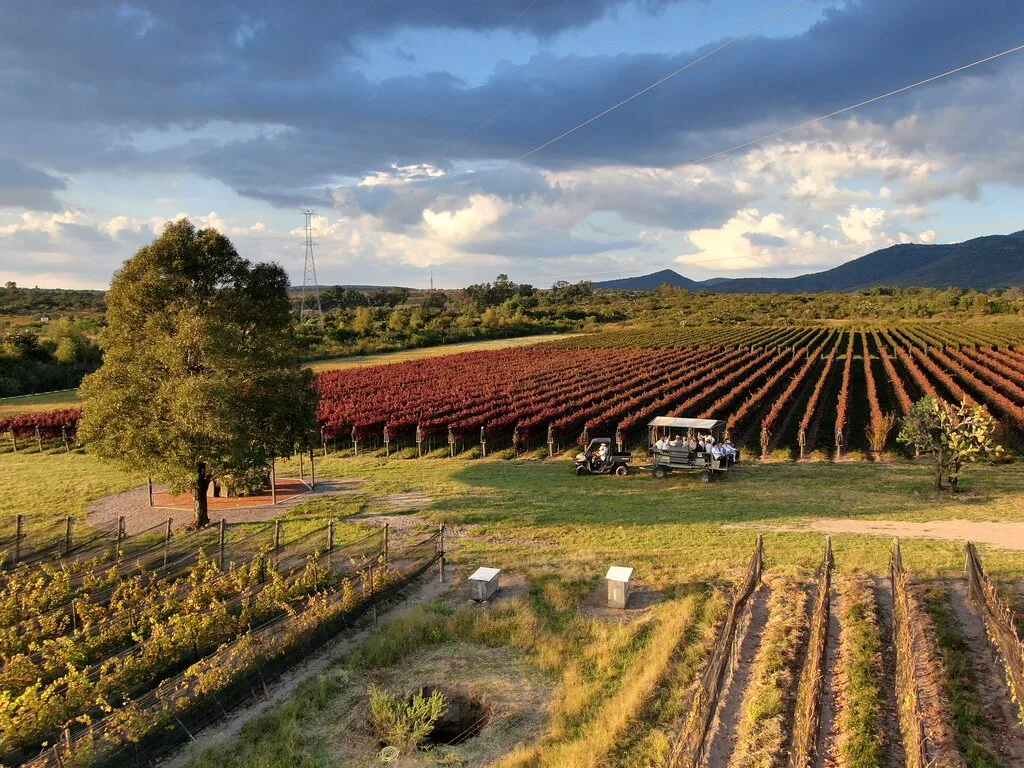
The festival is named for the harvest. At Xolo Vino, in Francisco Zarco, the harvest is by hand and runs from July to September, according to its profile, so the Committee's dates fall in the middle of picking season. What is picked in August is not drunk that year. At Xolo Vino the wine ferments in steel tanks, spends twelve months in French oak barrels, then rests in large tanks and is kept another year in bottle before release, so the bottle from that harvest reaches the table at least two years later.
Where should you sleep during the festival and when should you book?
A local festival guide warns that the valley's boutique hotels tend to sell out months ahead, and suggests staying in Ensenada, about 30 minutes away, when the valley is full. Two valley options with profiles on this site are the Surya hotel, with 18 rooms, among them the Classic Room, Terraza Suite, Vista Viñedo Suite and Surya Suite, the restaurant Lupe 87 and a seasonal promotion for the 2026 harvest, and Terra del Valle B&B, a five-room bed and breakfast in El Porvenir, with queen beds, a terrace with a view of the hills, an outdoor pool, a fire pit and continental breakfast. In Ensenada is the Hotel Coral & Marina, in the Playitas area, the site of the opening. Its profile mentions a marina with 353 slips, four restaurants and bars, a spa and a pool, and about 147 rooms according to travel listings. Anyone who wants to stay inside a winery can also look at Nativo Vinícola, with a guesthouse at the entrance and a chalet with a terrace and a view of the hills.
To compare lodging with its own vineyard, there is the guide to vineyard hotels, and to work out the full cost of the trip, the one on what it costs to go to Guadalupe Valley. The festival dates fill the hotels, according to the local guide, and each business's profile says how to reserve.
How do you get around and what should you bring?
These are weeks of tastings, and the usual rule counts double: whoever drinks does not drive. The guide to touring the wine route without driving gathers the tours, the designated drivers and the ride services used in the valley. If you go to the Muestra del Vino, decide the transportation there and back when you buy the ticket, not when you leave. Anyone coming from the border should count on about 90 minutes on the road to the valley, according to a regional travel guide.
For the rest of the day, the region's travel guide recommends light clothing for hot days and a jacket for cool nights, and flat, comfortable shoes, because wineries often have gravel paths and uneven ground. It also suggests visiting no more than two or three wineries a day and drinking water between tastings. For the weather in each month, the guide to the best time to visit Guadalupe Valley gives the context.
How many people come and what does it leave the region?
For 2026 the Committee projected about 90,000 visitors, an average stay of three days and an economic impact above 600 million pesos. The edition's theme was Vitivinicultura y enoturismo sustentables (Sustainable Winegrowing and Wine Tourism), and among the actions on that axis the Committee reported 15 metric tons of glass recovered in four mega collection drives in the valley.
Those figures are the organizer's projections, not independent counts. They help to understand the scale: it is the season when the valley receives the most people at once, and that is why reservations, transfers and tickets move earlier than you would expect.
What other wine dates are there after the festival?
When August ends, the season continues in other states. Querétaro and Guanajuato close their harvests in mid-October, and that schedule is in the guide to fall harvests and wine festivals. To see the whole year, month by month, there is the Mexico wine calendar, and the confirmed dates for each event live in the events calendar.
For the valley, note two to-dos and leave the rest open: the Committee's announcement, which in 2025 came in early May, and the hotel, which does not wait for the announcement if you plan to sleep inside the valley. The Baja California region page groups the profiles so you can choose by zone.
Share this story with whoever travels with you.