Mexican wines and grapesBaja California
Mexican Nebbiolo: What Grape It Really Is and What the DNA Studies Say
Mexican Nebbiolo hides a genetic story: what DNA tests found in Baja California, what Lambrusca di Alessandria is and how to taste the two side by side.

In Guadalupe Valley (Valle de Guadalupe), Baja California, Mexico, Nebbiolo is a word you read on labels from big houses and small ones. It sounds like legend: it is the grape of Barolo and Barbaresco, the great reds of Italy's Piedmont. But Mexican Nebbiolo hides a twist that is rarely told in full. According to the genetic analyses reported by the food outlet 7 Caníbales, done between 2017 and 2019 at a University of California, Davis laboratory, the vast majority of the vines studied that were known in Baja California by that name turned out to be another Piedmont grape, old and almost forgotten: Lambrusca di Alessandria.
The most repeated account tells of a voyage: plants that crossed the world without a label and kept an illustrious name stuck to them. The story is not closed, either. There is also certified Nebbiolo in Baja California, and not every plot that carries that name holds the same plant.
What is Nebbiolo in its homeland?
Nebbiolo is a red grape from Piedmont, in northwest Italy, and Barolo and Barbaresco are made from it alone. Those two names are production zones, not grapes. The grape is the same. The name is believed to come from nebbia, Italian for fog. One explanation points to the mist that covers the slopes in autumn, when the grape is about to ripen.
In the glass it has a personality that is hard to mistake: a surprisingly light color, between pale ruby and garnet, alongside high tannins and high acidity. It looks light to the eye and turns out firm in the mouth. Among its most cited aromas are rose, cherry and anise.
Light color with firm structure: that is the signature to keep in mind for everything that follows.
How did the grape called Nebbiolo reach Baja California?
The most repeated explanation is the one Wine Enthusiast gives in its guide to Baja California: the vines planted as Nebbiolo were in fact several Piedmont varieties that arrived in the 1940s without identification labels. The specialized site Exotic Wine Travel tells a similar version. That is how different grapes could have ended up planted under a single name.
The name stuck. Today Nebbiolo is one of the most mentioned grapes in our directory: it appears in the text of twelve profiles, ten in Baja California, one in Zacatecas and one in Aguascalientes. With the name came expectations. Anyone who orders a Nebbiolo expects, rightly, something close to what the Piedmont manuals describe. When the glass does not match that description, the question arises that finally took the case to the laboratory.
What did the DNA tests find?
For a long time, varieties were recognized by eye: by the shape of the leaf, the cluster, the berry. A genetic test changes the rules, because it compares the plant's DNA profile with that of reference varieties. If they match, the identity is established without depending on appearance.
According to the 7 Caníbales report La nebbiolo mexicana se revela (Mexican Nebbiolo Reveals Itself), in 2017, 2018 and 2019 the identification laboratory of Foundation Plant Services, at the University of California, Davis, analyzed specimens of Nebbiolo from different vineyards and zones of Baja California. Of the vines analyzed, 90% were identified with certainty as Lambrusca di Alessandria.
Not every source measures the reach of the finding the same way. Wine Enthusiast, in its report Is Mexican Nebbiolo Actually Nebbiolo?, refers to a test that pointed in the same direction and calls for caution: it was a single sample from a single vineyard, and more analyses would be needed before calling anything definitive. The same magazine observes that few producers dare to test their vines, for fear of losing a name that sells.
The confusion is not exclusive to Mexico, either. The entry for Lambrusca di Alessandria in the variety registry of Foundation Plant Services says that vine samples believed to be Nebbiolo, sent by a producer to its laboratory, matched the reference profile of that grape.
The Vinos El Cielo blog sums up the middle ground: an important part of the plantings historically identified as Nebbiolo in the region corresponds genetically to Lambrusca di Alessandria, but that does not mean that every Mexican planting with that name is the same, nor that all the Nebbiolo grown in Mexico is misidentified. And according to Wine Enthusiast, Baja California also has certified Nebbiolo, which shows the color, aromas and tannins proper to the variety.
Tip
When you read that Mexican Nebbiolo is not Nebbiolo, keep the nuance in mind: the tests speak about the plants analyzed and the historic vines, not about every bottle that carries that name today.
What is Lambrusca di Alessandria?
It is an old red grape from Piedmont, unrelated to Nebbiolo and, despite the similar name, to Lambrusco as well. A genetic study of the historic varieties of northwest Italy, published in the journal Scientific Reports in 2020, describes it as a robust, dark-colored variety used for blending, and proposes Neretto di Marengo and Crovìn as its parents, traditionally grown in southeast Piedmont and neighboring Liguria.
7 Caníbales describes it as an almost extinct grape. Seen that way, the vineyards of Baja California hold a chapter of Piedmont's winegrowing history that was close to being lost there. It is not the only trace outside Italy, either: in California, at least one Temecula winery already bottles it under its own name.
Notice the contrast: Nebbiolo is light in color, while Lambrusca di Alessandria, according to that study, is dark. The difference will help you when you have the glasses in front of you.
So is Mexican Nebbiolo fake?
In the sense that matters at the table, no. The wine is what it is: the fruit of specific vines, in specific soil and climate, worked for decades. What the tests call into question, in many of the plants analyzed, is the name of the variety, not the worth of the wine made from them.
What does change is how you read the label. The NOM-199-SCFI-2017 standard ties the name of a variety to a minimum of 75% of that grape in the wine, as we explain in our guide to reading a wine label, but no rule by itself corrects a plant that has carried the wrong name for decades. The word Nebbiolo on a bottle from Baja California does not guarantee which of the two grapes is inside, or in what proportion. None of our profiles says what result a genetic test would give in its vineyard, and it is not our place to guess. The question is asked at the winery:
- Where does the plant behind your Nebbiolo come from, and when was it planted?
- Has it been identified with a genetic test?
- Is it certified material or a selection from old vineyards of the valley?
A winery that knows its vineyard will gladly answer, and the answer, whatever it is, says as much about the wine as the glass itself.
What does it taste like, and how do you taste it with judgment?
The best way to understand this story is with two glasses. Pour a Nebbiolo from Piedmont next to a bottle labeled Nebbiolo from Baja California, both at the same temperature, cool but not cold, and compare them calmly:
- The color. Piedmont Nebbiolo is usually light, between pale ruby and garnet. If the one from Baja California is much darker, remember that Lambrusca di Alessandria is described as a dark-colored grape.
- The tannin and the acidity. In textbook Nebbiolo both are high, even if the color fools you. Notice how much it dries your gums and how much you salivate.
- The aroma. Look for rose, cherry and anise. Note what you find in each glass without forcing yourself to agree with anyone.
- The whole. The point is not to declare a winner but to understand why two wines with the same name on the label can tell such different stories.
If you do not have an Italian wine at hand, compare two or three bottles labeled Nebbiolo from different houses in the valley and ask each one where its plant comes from. To organize what you perceive, use the method in our guide to tasting wine: color, nose, palate and conclusion, noted glass by glass.
What should you eat with a Nebbiolo from the valley?
A red with firm tannin and acidity calls for substantial, well-seasoned dishes. According to the Wine & Spirit Education Trust (WSET), the salt and acidity of a dish soften the wine, while sweetness, umami and heat harden it. At the Mexican table, that translates like this:
- Yes: carne asada, skirt steak (arrachera), charcoal-grilled ribs, aged cheeses.
- With care: sweet moles and very hot salsas, which will make the wine feel rougher and more alcoholic.
- A trick: a pinch of salt and a few drops of lime on the taco soften the tannin of a firm red.
And if your glass turns out darker than textbook Nebbiolo, do not judge it alone: try it with carne asada and with aged cheese, and watch how it changes. The table is also a way of getting to know the grape.
Which wineries work with Nebbiolo in Mexico?
These wineries in our directory mention Nebbiolo in their profiles. No mention says which plant is in each vineyard, so use them as a starting point to visit and ask:
- L.A. Cetto, a house with roots in 1928, includes a Nebbiolo in its Reserva Privada line.
- Las Nubes planted Nebbiolo in 2009, among the first 30 acres (12 hectares) it set aside for commercial production, along with Grenache, Carignan, Cabernet Sauvignon, Merlot and Tempranillo.
- Bodegas Henri Lurton, in Francisco Zarco, a project of the Bordeaux winemaker Henri Lurton and his children, has Le Nebbiolo among its labels.
- Barón Balché introduced in 2008 a line of high-end wines that included a Nebbiolo, the Balch'é Cero, according to its profile.
- Villa Montefiori, the project Paolo Paoloni began in 1998 with a winemaking heritage from Italy and France, planted Nebbiolo alongside Sangiovese and Montepulciano, according to its profile.
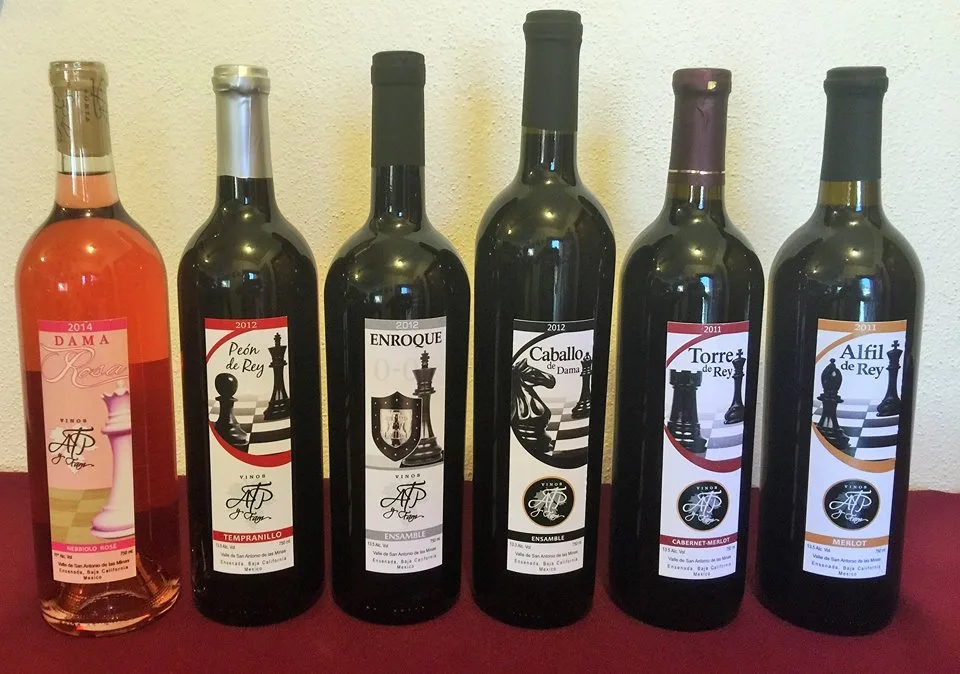
- Misiones de California, of the Velasco family, in San Antonio de las Minas, specializes in reds and counts Nebbiolo among its varieties.
- Outside Baja California, Vinícola Campo Real, in Zacatecas, mentions in its profile a 2019 Nebbiolo red, and Vinícola Santa Elena, in Aguascalientes, includes it among its grapes.
Catalogs change with every harvest and Cities and Wines of Mexico does not manage reservations, so ask each winery which wines it has available and what experiences it offers before you go.
What is still open in the story of Mexican Nebbiolo?
The title of the Vinos El Cielo piece says it precisely: it is an identity that keeps evolving. At least three questions remain on the table:
- How much of the planted Nebbiolo is actually Lambrusca. The analyses cited speak about specific samples. Only more testing, vineyard by vineyard, would give a complete map.
- How to name it on the label. If few wineries test their vines because of the commercial weight of the name, as Wine Enthusiast observes, the label will stay split between custom and genetics until there are more tests.
- What to do with a rarity. If Lambrusca di Alessandria is, as 7 Caníbales maintains, an almost extinct grape, the valley has in its hands a grape that could tell its own story, under its own name.
On your next visit to Guadalupe Valley and the other zones of Baja California, ask at the bar for a Nebbiolo and put the two questions that matter: where its plant comes from and whether it has been identified. Then taste it slowly, knowing that at least two stories fit in that glass: the story of the name and the story of the grape.
Share this story with whoever travels with you.