Cava 57 in San Juan del Río: How to Visit the Vineyard Behind the Palomas Sparkling Wines
Cava 57 in San Juan del Río: tours, tastings, Palomas sparkling wines, nearby wineries, where to stay and how to get there from Mexico City or Querétaro.
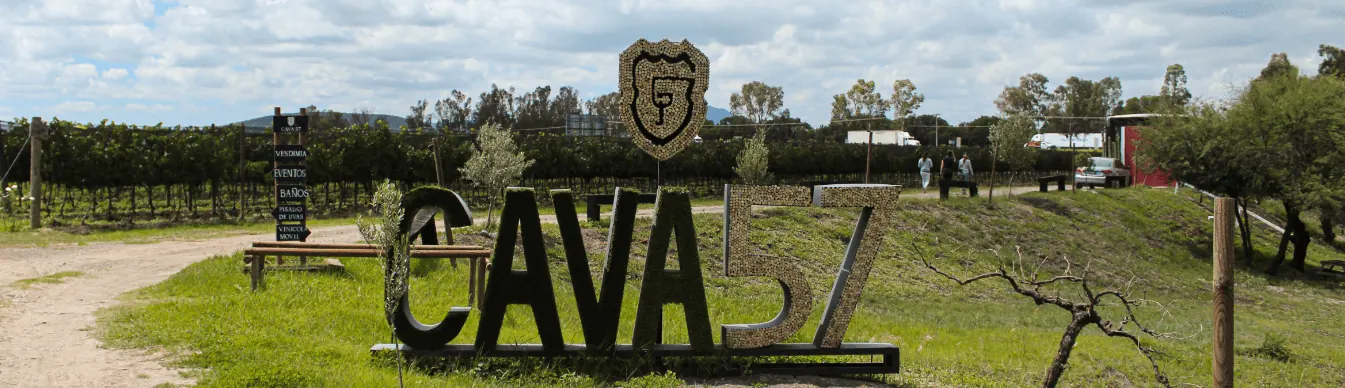
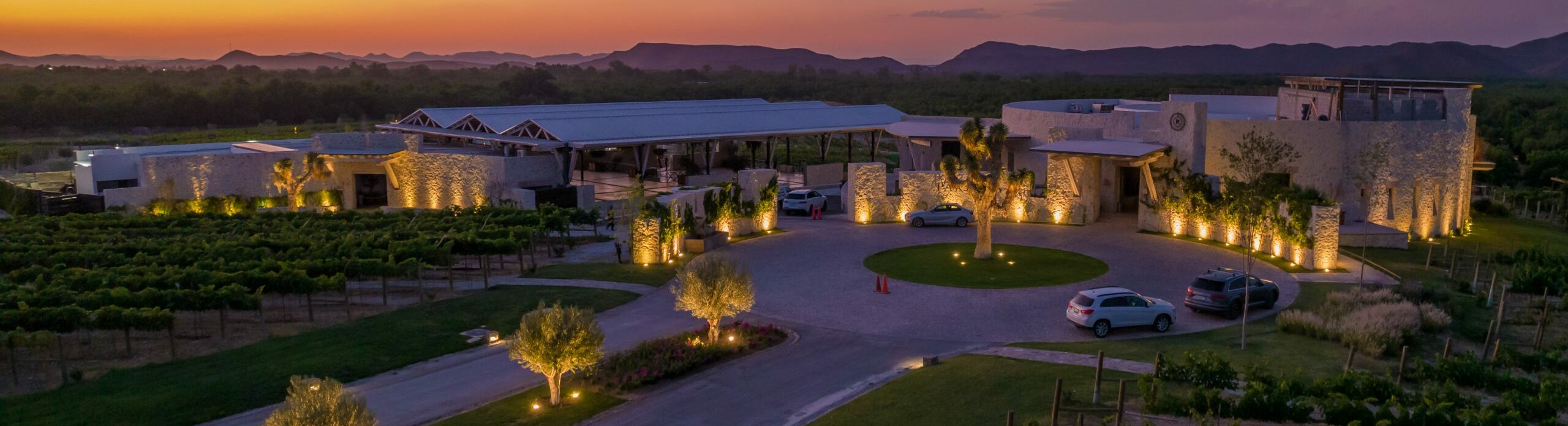
On May 19, 1975, at a ceremony led by Léopold Sédar Senghor, the president of Senegal, the ejido (a communally held farming community) of Palomas, in San Juan del Río, changed its name. From that day it has been called Senegal de las Palomas. Alongside that ejido, at km 173.6 on the Mexico City-Querétaro highway, stands Cava 57, the winery the Parrodi family founded in 2014 and whose sparkling wine shares its name with the old ejido: Palomas. From the capital it is about a two-hour drive, and you do not have to leave the highway to get there.
We published the first version of this guide in 2025 and in October 2026 we redid it with what the house's profile and its official site say. That version placed the winery in Tequisquiapan and gave it a founding date of 2010. Neither fact holds up. This one covers what happens on the visit, which wines to try, which other houses to add on the same trip, where to sleep and how to get there. Cities and Wines of Mexico does not take reservations. You request each appointment from the house itself.
If you are still choosing among the Querétaro wineries, our guide to Querétaro vineyards by municipality lays out the whole route. Here we stay with a single house and what surrounds it.
What is Cava 57 and where is it?
It is a young winery that was built in stages. During its first years it made its wine with the support of the infrastructure of Freixenet, the Catalan house that makes its Mexican sparkling wines at Finca Sala Vivé, in Ezequiel Montes. In 2021 it began making wine on its own, in its own winery, and that same year it opened its restaurant, Terruño 57.
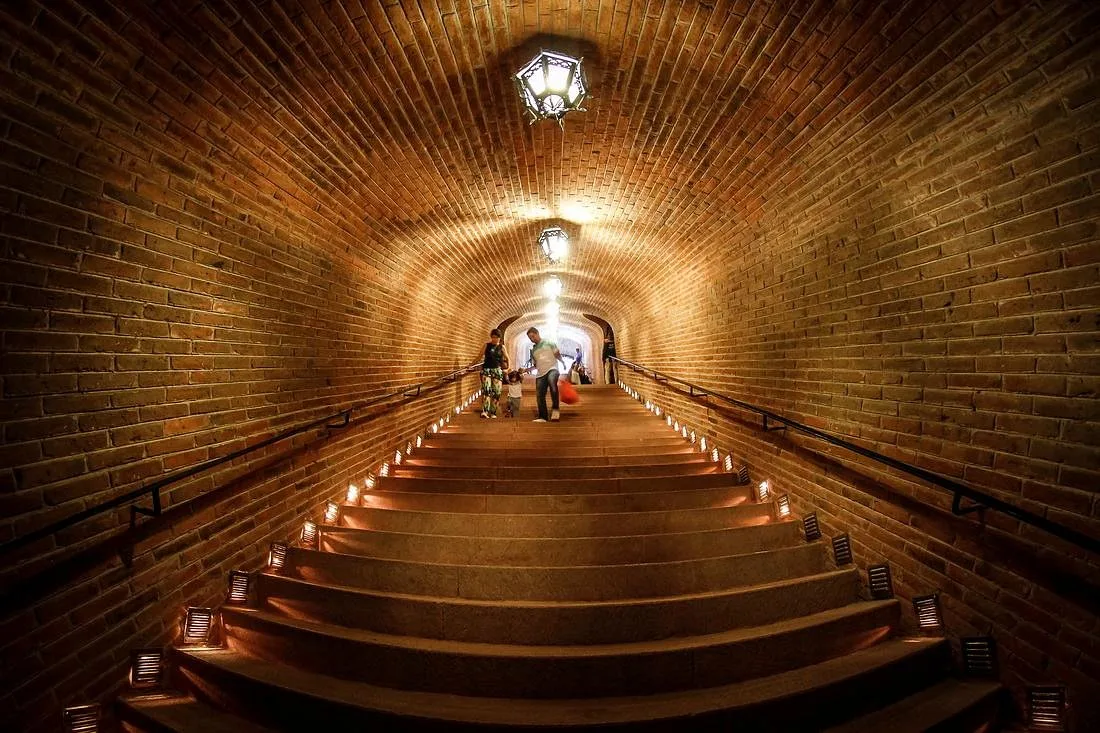
The vineyard covers about 15 acres (6 hectares) of land that is damper than the rest of the Querétaro route, which the family considers suitable for the vine. The first harvest open to the public was in 2015, when the Parrodis invited friends to pick grapes, and since 2017 it has received guided visits through the vineyard and its large underground cellar. The estate sits on the highway, between San Juan del Río and Pedro Escobedo.
What does a visit to Cava 57 include?
The visit comes in three formats, plus a table at the restaurant. According to its profile, reviewed in September 2026, these are the hours:
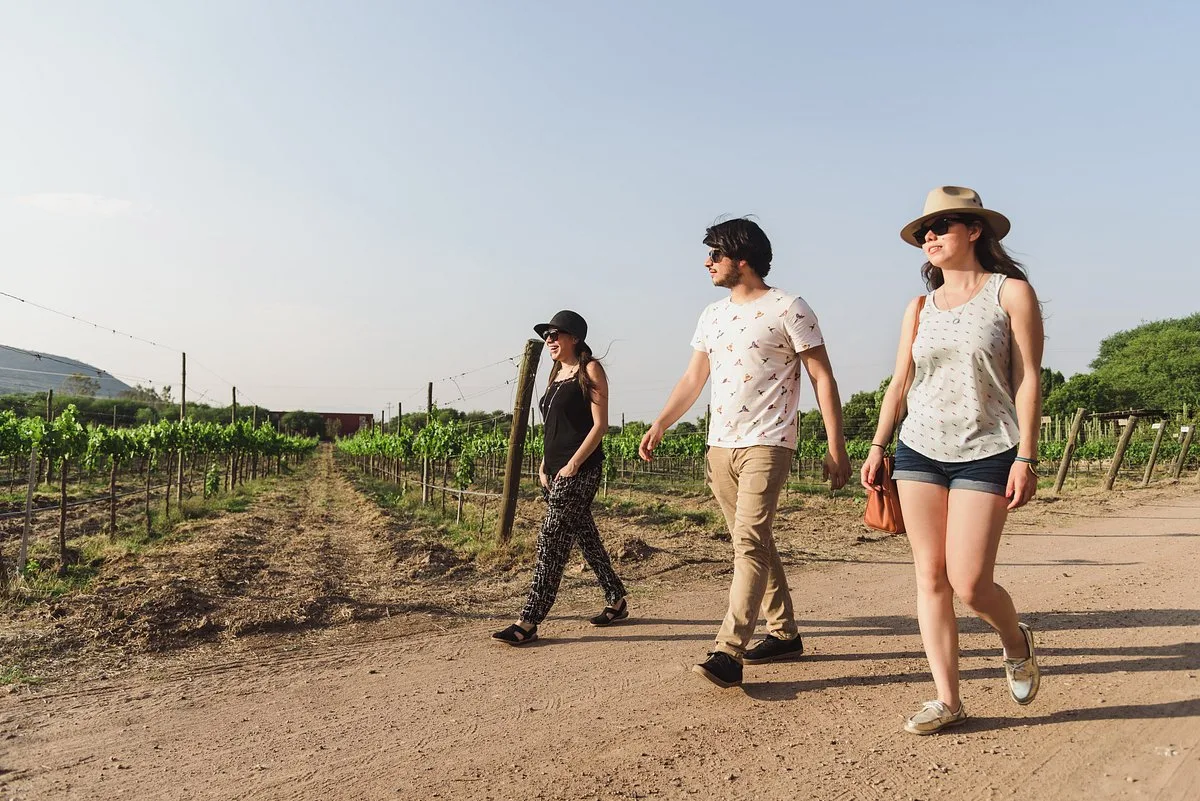
- Guided tour of the vineyard and the cellar. About 45 minutes among the rows and the underground cellar. It departs Wednesday to Sunday, at noon and 2 p.m.
- Three-label tasting. There are sessions at 1 p.m., 3 p.m. and 4:30 p.m.
- Sommelier experience. An hour of guided tasting in the late afternoon, Thursday to Sunday, at 5:30 p.m.
- Lunch at Terruño 57. The estate's restaurant, open since 2021, takes online reservations.
The pieces fit into a single afternoon: the midday tour, lunch and, if you stay, the 3 p.m. tasting or the sommelier one. A reservation is recommended. The estate also hosts weddings and group events, so if you go on a Saturday, ask when you book whether there will be one that day.
Tip
The hours in this guide are those in the Cava 57 profile, reviewed on September 24, 2026. Confirm them when you book and arrive with time to spare. The tour leaves at a fixed hour, and there are none on Mondays and Tuesdays.
Which wines should you try at Cava 57?
As in much of Querétaro, bubbles rule here. The house describes its style as fruity, light whites, persistent reds with dense body, and dry-profile sparkling wines and rosés, all from grapes of its own vineyards. Four labels sum up the range:
- Palomas 57 Brut Nature, the white blended sparkling wine with no added sugar. Stores that sell it describe it as made from Macabeo, Xarel-lo and Parellada, the three classic grapes of Catalan cava, with a second fermentation in the bottle.
- Palomas 57 Semi, the off-dry version of the same sparkling wine. A Palomas Brut also appears in stores.
- Indomable 57, the house's reserve red.
- Independiente 57, its reserve white.
If the tasting is limited to two labels, the profile suggests the Palomas Brut Nature, which sums up its specialty, and the Indomable, which shows the other side. What separates a brut nature from an off-dry, and what each term on the label says, is in our guide to Mexican sparkling wines.
Which other wineries can you add to the same trip?
Cava 57 fits into a morning, but the municipality and its neighbors make a weekend. These are the houses with profiles closest at hand, each with what its own profile says:
- Viñedos Tres Sarmientos (in Spanish), in the ejido of Santa Matilde, also in San Juan del Río. It is a family vineyard that makes natural wine and serves it in the field, with boards of cheese, cold cuts and artisanal sweets. It also offers country breakfasts among the vines. It receives guests by appointment only, requested by phone or through its social media.
- Finca Sala Vivé, at km 40.5 of the San Juan del Río-Cadereyta highway, in Ezequiel Montes. It is Freixenet's sparkling wine house in Mexico and keeps its bottles in a cellar 82 ft (25 m) underground. Its tours, of about 45 minutes, depart on weekdays at noon and 2 p.m., and on weekends there are several departures between 11 a.m. and 4 p.m. Visited the same weekend as Cava 57, it shows the region's bubbles in two houses that share a history.
- Viñedos Los Rosales, in Tequisquiapan, opens every day from 10 a.m. to 5 p.m. Its signature is the Salvador, a red-fleshed teinturier grape, and its walking tour of the vineyard and winery lasts about forty minutes.
- San Juanito Vitivinícola (in Spanish), on the old road to San Juan, in San José de la Laja, Tequisquiapan, looks straight at the Peña de Bernal. Its tours pass through the vineyard, winery and cellar and end with a tasting of three or six labels. Among them is a rosé sparkling wine of Malbec made by the traditional method.
A sample weekend
The times are approximate and serve to divide up the day. Confirm them when you book.
- Saturday, noon. Tour of the vineyard and cellar at Cava 57.
- Saturday, 1:30 p.m. Lunch at Terruño 57, with the table reserved.
- Saturday, 3:30 p.m. On the road to Tequisquiapan for the Los Rosales tour, which closes at 5 p.m.
- Saturday night. Dinner and a bed in Tequisquiapan or among the vines at San Juanito.
- Sunday, midday. Down to the cellar at Finca Sala Vivé, in Ezequiel Montes, and back by the highway.
If you prefer not to leave San Juan del Río, swap Sunday for a country breakfast at Tres Sarmientos, with the appointment requested beforehand.
What is there to see in San Juan del Río and Tequisquiapan?
San Juan del Río, the seat of the municipality, is a Pueblo Mágico (a designation for towns of special tourist appeal). Its best-known work is the Puente de la Historia, a stone bridge built between February 1710 and January 1711 on the Camino Real de Tierra Adentro, the silver route that linked Mexico City with Santa Fe, in New Mexico. In 2010 UNESCO inscribed that road on its World Heritage List, and the historic center of San Juan del Río is one of its sites. Walking the bridge and continuing along Avenida Juárez, which keeps the line of the old road, is a good way to fill the morning before the first appointment.
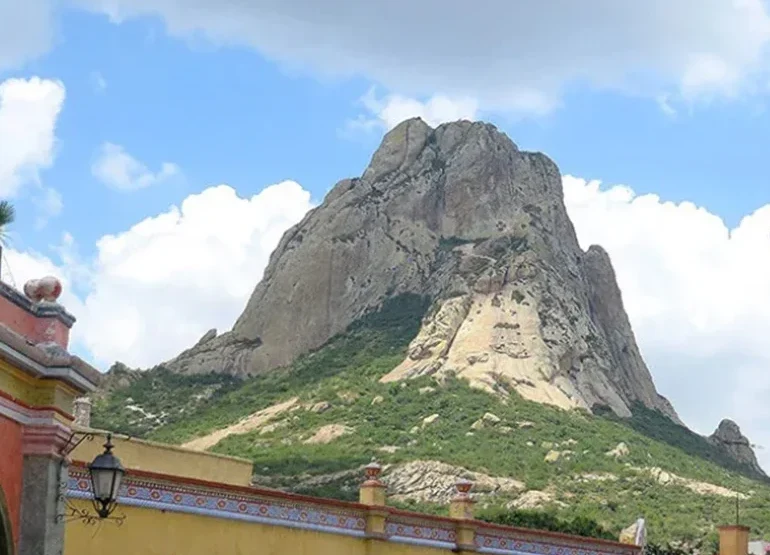
The other possible base is Tequisquiapan, about 12 miles (20 km) and a twenty-minute drive from San Juan del Río. It is a town of plazas and alleys with several wineries in its municipality, and for what lies outside the glass there is our guide to Tequisquiapan. If you have a day to spare, the Peña de Bernal is about 22 miles (35 km) from Tequisquiapan, and the activities for your trip to Bernal help fill the afternoon.
Where should you stay near Cava 57?
For sleeping nearby there are four options with profiles in the guide, depending on the kind of trip:
- A hacienda with its own vineyard. Fiesta Americana Hacienda Galindo, at km 5.5 of the Amealco-Galindo highway, on the outskirts of San Juan del Río, occupies a viceregal hacienda that tradition links to Hernán Cortés and La Malinche. It has a spa and a pool, and in 2019 it planted its vineyard, Château Galindo, with the advice of Gino Parrodi, of Cava 57, according to the local press. In 2022 it celebrated its first harvest.
- A hotel on the way. Villa Antigua, with a hacienda feel and its own restaurant, is at km 11.5 of the San Juan del Río-Tequisquiapan highway, between the two towns.
- A house among the vines. La Casona de San Juanito, the original home of one of the winery's partners, has five rooms in the vineyard and works as its lodging.
- A hotel in town. Hotel Casa de Vino, a three-minute walk from the center of Tequisquiapan, has wine as its theme and offers packages with tastings and vineyard tours.
Hacienda Galindo also has a direct tie to this trip: its vineyard was born with the advice of the house you came to visit, which also makes its wines. Those bottles are sold only at the hacienda, which offers sommelier tastings in its cellar on Saturday afternoons, by reservation. More estates with beds in Querétaro, Guanajuato and other states are in our list of vineyard hotels.
How do you get to Cava 57 from Mexico City or Querétaro?
You reach Cava 57 without leaving the toll highway. The routes, by starting point:
- By car from the capital. From Mexico City to San Juan del Río it is about 105 miles (170 km) on the Mexico City-Querétaro highway, around two hours if traffic helps. The winery is on the same highway, at km 173.6, just past San Juan del Río heading toward Querétaro.
- From Querétaro city. San Juan del Río is about 33 miles (53 km) away, a little over half an hour's drive, and the winery appears before you arrive, alongside Senegal de las Palomas.
- By bus. Several lines, such as ETN, run from Mexico City to San Juan del Río. From the station to the winery you need to continue by taxi or hired transportation. Arrange the return before the tasting.
- By train, later. The Mexico City-Querétaro passenger train, under construction, will have a station in San Juan del Río. In September 2026 the work was around 31% complete, its opening was shaping up for the second half of 2027 and the stations will begin construction that same year.
Tip
Before you leave, check on your map which side of the highway the entrance is on and where the nearest turnaround is. On a toll highway, missing the entrance costs several miles out and as many back.
If the plan includes tastings, someone in the group goes without a glass or the transportation is hired. The driver and tour options, with what to ask, are in our guide to touring the wine route without driving. And if you are still comparing getaways, our guide to vineyards near Mexico City puts Cava 57 next to the other Querétaro and Guanajuato options.
What do you need to book, and when is the best time to go?
Each house's profile has its contact details, and our guide to booking a visit explains what to say in the first message. This is the order:
- The visit to Cava 57. Reserve the tour or the tasting at the hour that suits you. If you want the sommelier experience, remember it runs Thursday to Sunday.
- The table at Terruño 57, especially on weekends.
- Tres Sarmientos, which receives guests by appointment only.
- The hotel, with time to spare if you travel during harvest season or on a long weekend.
- Transportation or the designated driver, before the first tasting.
Tastings are for adults of legal age only. If you travel with minors, ask when you book which part of the visit they can do. The previous version of this guide assumed that pets and children are admitted and that parking is free. Its profile does not say so, so ask in the same message.
In Querétaro, harvest season takes up the summer and the start of fall, with festivals at several wineries and a statewide festival at the close. The dates for each year are in the wine events calendar. Cava 57 opened its first harvest to the public in 2015. If you want to travel on those days, ask whether there will be a festival the year of your visit.
Before setting the date, write to Cava 57 with the details from its profile and reserve the noon tour on a Saturday. With that hour fixed, build everything else around it: the table at Terruño 57, the afternoon's second winery and the bed in Tequisquiapan or at Galindo.
Share this story with whoever travels with you.