Mexican wines and grapesCoahuilaBaja California
History of Wine in Mexico: Five Centuries of Vines, Missions and Wineries You Can Still Visit
Cortés ordered vines planted in 1524. From Parras and the missions to Guadalupe Valley, Mexico's wine history and the wineries where you can see it.
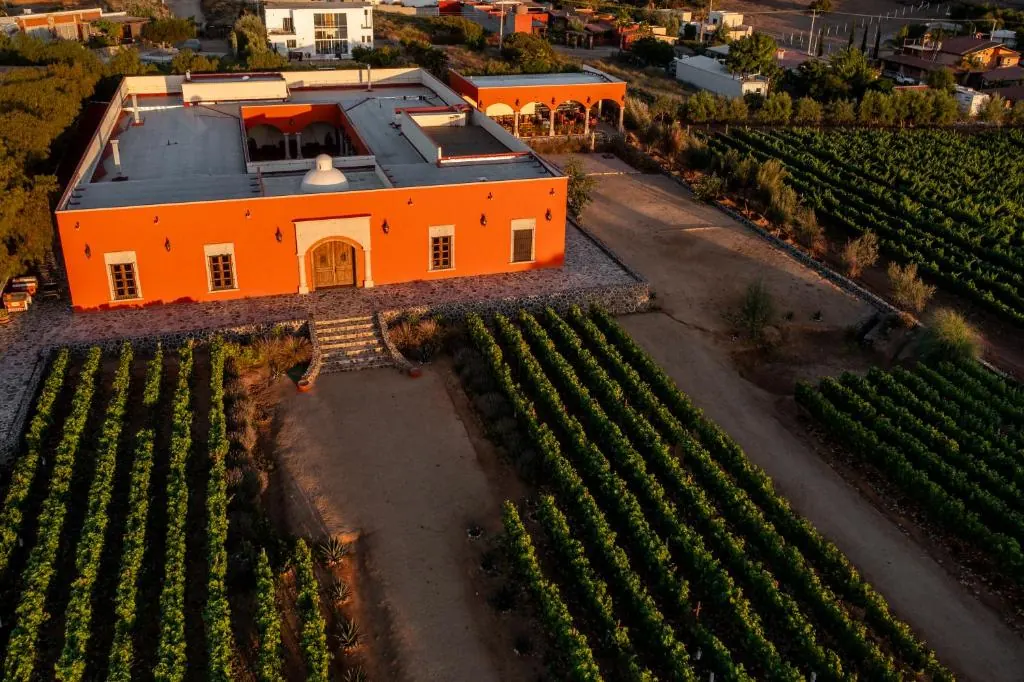
On March 20, 1524, less than three years after the fall of Tenochtitlan, Hernán Cortés signed in Mexico a set of ordinances of good government with a winegrower's assignment. Every settler holding Indigenous people in encomienda (the colonial labor-tribute system) had to plant one thousand vine cuttings each year for every hundred Indigenous people under his charge, until reaching five thousand vines per hundred. That is how the history of wine in Mexico begins, in ink and under penalty, a craft five centuries old that started earlier than in almost any other country on the continent.
What followed fits on a map. A hacienda in a spring-fed Coahuila valley, born from a royal land grant of 1597. Missionaries who carried the vine from mission to mission across a peninsula of stone and sun. Russian families who came to Guadalupe Valley (Valle de Guadalupe) to sow wheat. And an industry that lived off brandy, nearly disappeared in the 1980s and came back at the hands of a generation that bet on quality.
Here is that history told through its places, with what the documents say and with its doubts. Several dates in circulation, even in academic work, do not hold up under review, and where there is legend we say so. At the end, six wineries with profiles on this site where that history can still be visited.
Since when has wine been made in Mexico?
Since the first years of the Colony, and for a practical reason: without wine there was no Mass. Bringing it from Spain was expensive, the trip took months and part of the cargo arrived soured. In New Spain, Cortés's ordinances put the vine on the same list as wheat, barley and the fruit trees of Spain. The bread and the wine of the altar arrived together.
The text of those ordinances holds a detail that is seldom told. Cortés allowed the cuttings to be planted aunque sean de la planta de su tierra (even if they come from the plants of their own land), that is, from the wild vines already growing in the country, choosing the best, and asked that they be grafted with Spanish varieties as soon as there was enough stock. The first plan for the New Spain vineyard thus combined American roots and Spanish grapes.
The grape that ended up prevailing is the one we now call Mission, the Spanish Listán Prieto, called País in Chile and Criolla Chica in Argentina. It withstood drought, heat and poor soils, and for centuries it served every purpose: communion wine, table wine and aguardiente. Its full story is in the history of the Mission grape, and there are still living vines that tell it. In San Antonio de las Minas, La Casa Vieja tends Mission vines more than a century old, planted own-rooted, ungrafted.
In the center of the viceroyalty the vine did not thrive as expected. The academic work we cite in the story of the ban speaks of an early failure. Wine moved north, to the dry valleys with spring water. The most famous of those oases is Parras.
Tip
On a wine list or a back label, the Mission grape may also appear as Listán Prieto, its name in Spain. If you are looking for a label made with the missionaries' grape, ask for both names.
Which is the oldest winery in the Americas?
The answer has a date and it has paper. The Parras valley owes its name to the wild vines the first settlers found next to its springs, and there, on August 19, 1597, the governor of Nueva Vizcaya granted Lorenzo García, with authorization from Philip II, lands and permission to plant vines and make wine and aguardiente. The following year the mission of Santa María de las Parras was founded, the origin of the town.
On that land grant the Hacienda de San Lorenzo was built, which bears the name of its founder. It had thirteen owners until 1893, when Evaristo Madero traveled to Europe to buy the San Lorenzo-Mexique company and, with it, the property. Today it is Casa Madero, which, because of that document, presents itself as the oldest winery in the Americas, and most sources recognize it as such. In its oldest areas, presses from 1808 are preserved.
Another date circulates in Parras: 1593. Tourist guides and wine pages attribute to Francisco de Urdiñola, conqueror of Nueva Vizcaya, a winery founded that year that they call Marqués de Aguayo. The name gives away the anachronism. Charles II created the marquisate of San Miguel de Aguayo in 1682 for Agustín de Echeverz, married to a great-granddaughter of Urdiñola. Several histories of Parras say that Urdiñola had water, lands and vines in the region. For the 1593 winery we did not find a document comparable to the 1597 land grant, and almost all sources give the title to San Lorenzo.
How to tour the valley today, with its other houses, is in our guide to the wineries of Parras, and the rest of the state is in the profiles of the Coahuila wineries.
Is it true that Spain banned wine in New Spain?
It is the most repeated story in Mexican wine, and the most nuanced. The traditional version says that in 1595 Philip II, pressured by the producers of the peninsula, banned planting new vineyards in the Indies and ordered the existing ones uprooted, except those that served the Church. The order existed. It was compiled in the Recopilación de Leyes de los Reinos de las Indias (the compilation of the Laws of the Indies), which Charles II approved in 1680.
What is debated is who it was addressed to and how much it was applied here. An academic paper available in the open archive HAL argues that the 1595 instructions were aimed at Peru, whose production did compete with Spain's. Its addressee, Luis de Velasco, had just been named viceroy of Peru. And there is a fact anyone can check: two years after the edict, the Crown authorized the Parras vineyard in writing. Reading the edict as a carried-out order to destroy every vineyard in New Spain oversimplifies what the papers say. The two layers of the matter are in our story on the ban on wine in New Spain.
Who brought the vine to Baja California?
The Jesuits, a century after Parras. In 1697 they founded Loreto, their first mission on the peninsula, and in 1701 Juan de Ugarte arrived. The following year he rebuilt the mission of San Francisco Javier, in the mountains. There he built dams and canals, sowed grain and fruit trees and planted vines. The first wines of the peninsula are attributed to him.
In 1767, Charles III expelled the Society of Jesus from his dominions, and in February 1768 the sixteen Jesuits of the peninsula gathered at Loreto to set sail into exile. Their vines stayed. That same year the Franciscans arrived, led by a Majorcan friar, Junípero Serra, who in 1769 continued north to found the missions of Alta California.
With Serra another myth was born. He did not bring the Mission grape from Europe, as some histories claim. The vine had been in New Spain for more than two centuries when he arrived. Nor are there papers backing the image of the friar planting California's first vine in San Diego in 1769: the letters and mission records from before 1778 mention no vineyards. According to other letters, the first cuttings arrived by ship from Baja California in 1778, and the first recorded vineyard in Alta California was planted at San Juan Capistrano beginning in 1779, with six farmers who came from the peninsula. California wine began with cuttings from what is now Mexico.
In 1773, the Franciscans ceded the peninsular missions to the Dominicans, and on August 19 of that year Francisco Palóu, Serra's successor, raised a cross marking the boundary between the missions of one order and the other, a line that, it is said, is at the origin of the border between the two Californias. On the Dominican side, south of what is now Ensenada, Friar José Loriente founded the mission of Santo Tomás de Aquino on April 24, 1791. It had water and farmland, and by the end of that decade it was already yielding grapes for wine.
The mission was secularized in the 19th century and ended up abandoned. In 1888, shortly after the founding of Ensenada, two partners, one of them the Spaniard Miguel Ormart, bought land in that valley to plant vines and make wine. That is how Bodegas de Santo Tomás was born, the house that links the valley of the Dominicans to the wine of the Baja California region that now fills the routes.
What happened to Mexican wine in the 19th century?
The century began with a priest who planted vines. In October 1803, Miguel Hidalgo arrived as parish priest of the congregation of Dolores, in Guanajuato, and there, according to his biographies, he taught his parishioners to grow the vine, planted mulberry trees to raise silkworms, encouraged beekeeping and opened workshops for pottery, brick and tanning. That is documented. The best-told part, that the viceregal authorities ordered his vines uprooted, is repeated in many histories of Mexican wine, but we did not find the document that backs it, so it goes here as tradition. Today there are vineyards around Dolores Hidalgo, as our Guanajuato wine route tells.
With Independence and secularization, the missions lost their support and many of their vineyards were abandoned. The wine of the north passed into the hands of landowners and immigrants, and in Coahuila a good part of that history went through the still. Around 1860, the Italian Michele Francesco Ferrigno settled in Cuatro Ciénegas, Hispanicized his name as Miguel Ferriño and began distilling grape aguardiente and brandy under the name La Fronteriza. The house remains open as Bodegas Ferriño, in the hands of his descendants. In 1865, the English engineer Fernando Chapman bought land west of Parras, planted vines and built the winery of the Antigua Hacienda de Perote, which still crushes its grapes in July and August and sells the result as wine and aguardiente.
That pull toward spirits has its own history, from the 1597 land grant, which already authorized aguardiente, to the industrial brandy of the 20th century, and it is in the history of Mexican brandy.
What did the Russians leave in Guadalupe Valley?
Between 1905 and 1907, about forty Molokan families, nearly three hundred people according to a study by the Universidad Autónoma de Baja California, settled in Guadalupe Valley. They were dissident Christians leaving Russia to escape persecution by the tsarist government, and they settled in what is now the ejido Francisco Zarco, the Russian colony. They came to sow wheat and barley.
The vine came later. With droughts and the wearing out of the land, some colonists tried vines. Local chronicles date to 1917 the valley's first Russian vineyard, planted by Jorge Afonin, and what was made was mostly for local consumption. What they left was a populated and cultivated valley, the base on which the 20th century would build the country's main wine region.
Their memory is still in view. The Museo Comunitario Ruso (the Russian Community Museum) occupies a house built in 1905 and opened as a museum in 1991, and at Rancho Toros Pintos, Vinos Bibayoff, from a family descended from those colonists, keeps clothing and utensils of the families who arrived in a small museum. How to tour Francisco Zarco and the rest of the valley is in our guide to Guadalupe Valley by zones.
Why did Mexican wine nearly disappear, and how did it come back?
The 20th century began with immigrants and big houses. In 1928, Angelo Cetto, a farmer from Trentino, settled in Baja California and began planting vines with what he had learned in northern Italy. From that came L.A. Cetto. The Jerez house Domecq arrived in Mexico in 1947 with brandy first. In 1963 it began bottling table wine, and in 1972 it built in Guadalupe Valley the winery of Casa Pedro Domecq, which presents itself as the first large-scale one in the area.
It was the century of brandy. Casa Madero says that the boom in its consumption consolidated it in the country's taste, and in Aguascalientes, while the Feria de la Vendimia (the harvest fair) lasted, from 1954 to 1982, most of the grapes ended up in the distilleries, according to the magazine Líder Empresarial. Then came two nearly consecutive blows. The same magazine recalls a 1982 regulation that allowed brandy producers to add cane sugar, cheaper than grapes. And in 1986 Mexico joined the GATT, the General Agreement on Tariffs and Trade, with which it opened its borders to imports. With the opening, wrote the magazine Gatopardo, imported wines flooded the country and the Mexican wine industry practically disappeared.
The accounts of that crisis tell what happened in the field: wineries stopped buying grapes, the price collapsed and many producers abandoned their plots or pulled up their vines to plant something else. The same crisis, as Wine Enthusiast sums it up, closed many wineries and gave birth to others with quality as the goal.
That turn has names. In 1986, the same year as the GATT, L.A. Cetto launched its Reserva Privada Nebbiolo, which the house presents as the first barrel-aged Nebbiolo bottled in Mexico. In 1987, five friends founded Monte Xanic in Francisco Zarco, with Hans Backhoff, a doctor by training, leading the winemaking. Its first harvest, in 1989, was about 6,200 cases of Chenin Colombard and Cabernet Sauvignon. In 1988, Santo Tomás called on Hugo D'Acosta, trained in Montpellier and Turin, as winemaker, and he stayed twelve years. In 1997 he made at Casa de Piedra, in San Antonio de las Minas, the first harvest of El Vino de Piedra, a red of Tempranillo and Cabernet Sauvignon. He later opened a winemaking workshop in El Porvenir through which, according to La Jornada, a good share of those who now own wineries in the valley passed.
How many states produce wine in Mexico today?
Seventeen, according to figures from the Consejo Mexicano Vitivinícola (Mexican Wine Council) that the press collected in September 2026, a few days before Mexican Wine Day: more than 550 winegrowing projects spread across 17 producing states. Baja California remains at the head of production, and Coahuila, Querétaro, Guanajuato, Aguascalientes, Zacatecas and Chihuahua have routes of their own. There are vineyards from Sonora to Puebla. Each route, with its grapes and its season, is in Mexico's wine routes, state by state.
History has also become travel: wineries receive guests with tours, tastings and meals, and some towns have their high season at harvest. For its 2026 harvests, Parras expected more than 30,000 visitors, according to El Siglo de Torreón.
And Mexican wine has won a place at competitions. According to the same Consejo, in 2025 its wines added up to more than a thousand international medals, a quarter more than the year before. In 2026, the Guía Peñín gave 94 points to three of the country's wines, among them Monte Xanic's Gran Ricardo 2023, and the Concours Mondial de Bruxelles chose as best Mexican wine a red from the outskirts of Dolores Hidalgo, the town of the priest of the vines. The full roundup is in the Mexican wine awards of 2026.
Which historic wineries in Mexico can you visit?
Six houses with profiles on this site where history can be seen up close. At all of them, the visit is confirmed with the winery. This site does not reserve.
- Casa Madero, in Parras de la Fuente. The hacienda of the 1597 land grant: the tour enters the oldest areas of the winery, with presses from 1808 and barrels more than half a century old, and the house also offers a three-label tasting. The shop is open every day.
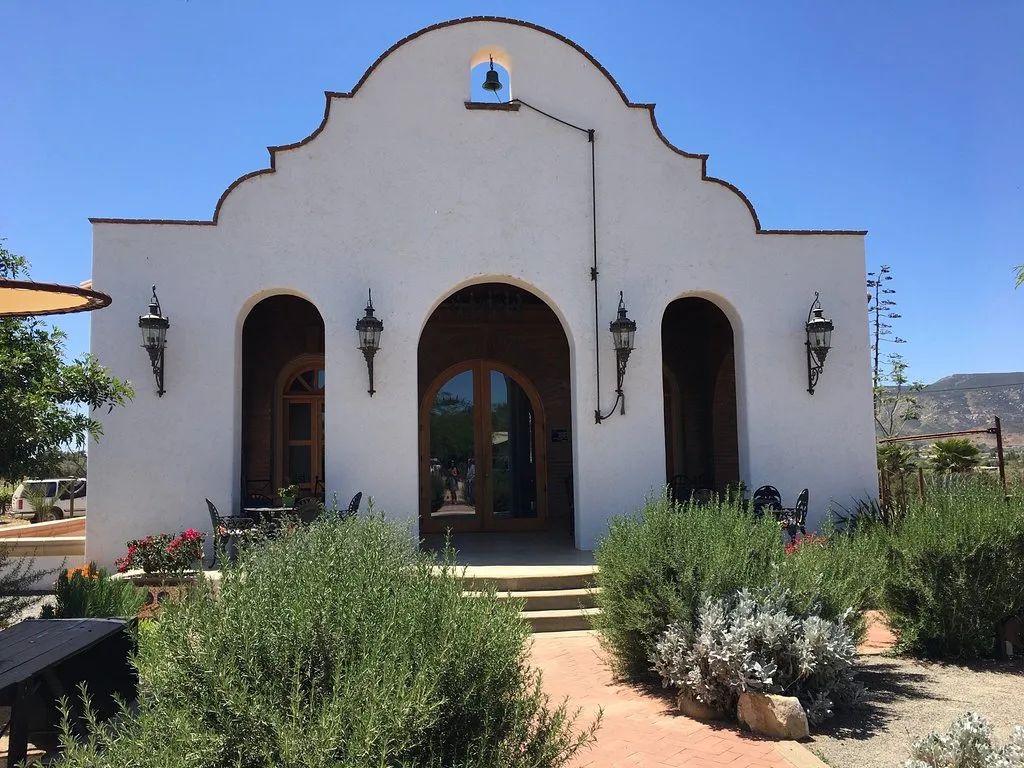
- Antigua Hacienda de Perote, west of Parras. In the old main house of the winery that Fernando Chapman built in 1865, barrels and old crushing tools are preserved. Today it is also a hotel, and the front desk gives information on tours.
- Bodegas de Santo Tomás, in Ensenada. More than 135 years of wine in the valley of the Dominican mission. It has three cellars with guided tour and tasting. The one on Avenida Miramar, in the center of the port, can be visited without leaving the city.
- La Casa Vieja, in San Antonio de las Minas. A 19th-century adobe surrounded by Mission and Palomino vines more than a century old, which Humberto Toscano vinifies with no added sulfites. It has a tasting room. It is best to confirm the hours before going.
- Vinos Bibayoff, in Guadalupe Valley. The Molokan memory told by one of its families: a small museum with clothing and utensils of the colonists, a tasting in the cellar and, by appointment and for groups of five or more, the tour of the vineyard and winery.
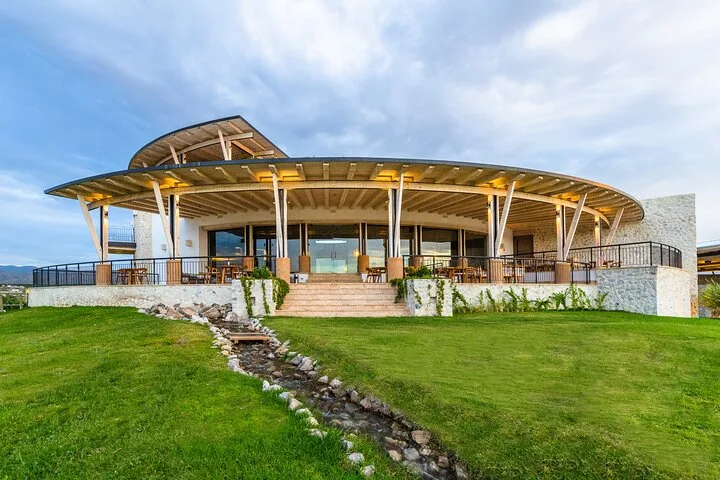
- Casa Pedro Domecq, in Guadalupe Valley. In 2018 it opened a museum that tells the history of Mexican wine from the arrival of the missionaries, with pieces from 16th-century Spain, next to an underground cellar of about 22,500 bottles.
Tip
Casa Pedro Domecq reserves all its visits and closes on Tuesdays, and the full Bibayoff tour asks for an appointment and a minimum group of five people. Fix those two dates first and arrange the open-room houses around them.
The first step fits in one message: from the Casa Madero or the Santo Tomás profile, ask for its contact and ask which days there is a winery tour. One is in the Coahuila desert and the other faces the Pacific. With that date confirmed, the rest of the route is built from the profiles in this story.
Share this story with whoever travels with you.